invoice vs receipt

Confused About Invoice vs Receipt? Read This First
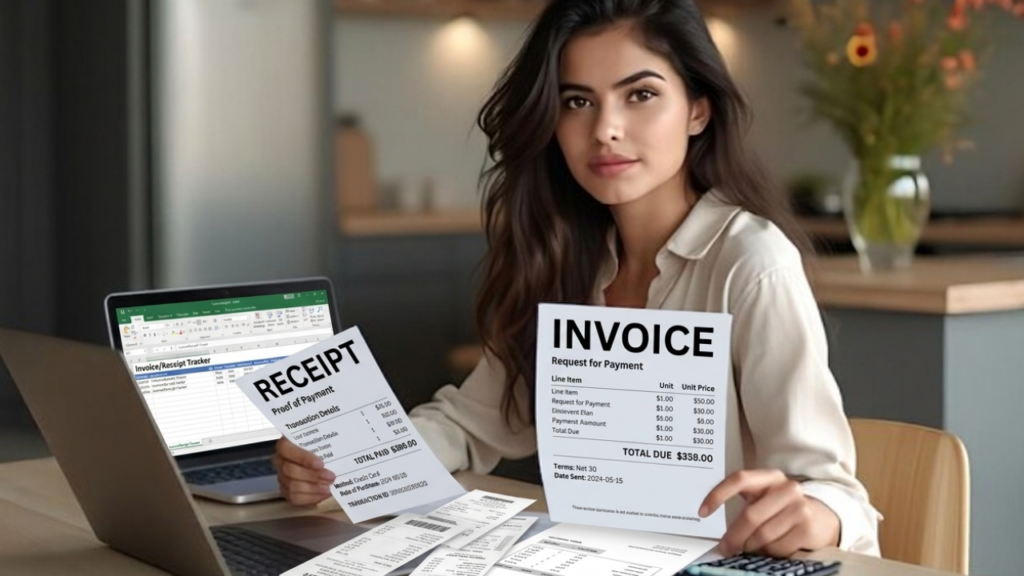
If you run a business, work as a freelancer, or even shop online, you’ve probably heard the terms invoice and receipt. Many people think they are the same—but they are not. Understanding the difference is important for managing money, keeping records, and avoiding confusion.

In this blog, we’ll explain invoice vs receipt in simple words, with examples, so you can clearly understand when and how to use each one.

What Is an Invoice?

You create an invoice before the buyer makes the payment. It informs the buyer how much they owe and when the payment is due. Understanding how to create an invoice properly ensures clear communication and timely payment.

In simple words, an invoice means: “You need to pay me for this product or service.”

When Is an Invoice Used?

An invoice is created before the payment is made. It tells the buyer how much they owe and when they should pay.

Example of an Invoice

Imagine you are a freelancer who designed a logo for a client. After finishing the work, you send them an invoice that includes:

  • Your name or business name
  • Client’s name
  • Description of work (logo design)
  • Amount to be paid
  • Payment due date

This invoice tells your client: “Please pay ₹5,000 within 7 days.”

What Is a Receipt?

A receipt is a document given after payment is completed.

In simple words, a receipt means: “I received your payment.”

When Is a Receipt Used?

A receipt is issued after the buyer pays the money. It confirms that the transaction is complete. Businesses, freelancers, and service providers often use billing software to generate receipts automatically.

Example of a Receipt

Using the same example:

After your client pays ₹5,000, you send them a receipt that includes:

  • Payment amount
  • Date of payment
  • Payment method (cash, bank transfer, etc.)
  • Confirmation that payment is received

This tells your client: “Thank you, I got your payment.”

Main Difference Between Invoice and Receipt

Simple trick:
Invoice = Ask for money
Receipt = Got the money

difference between invoice and receipt

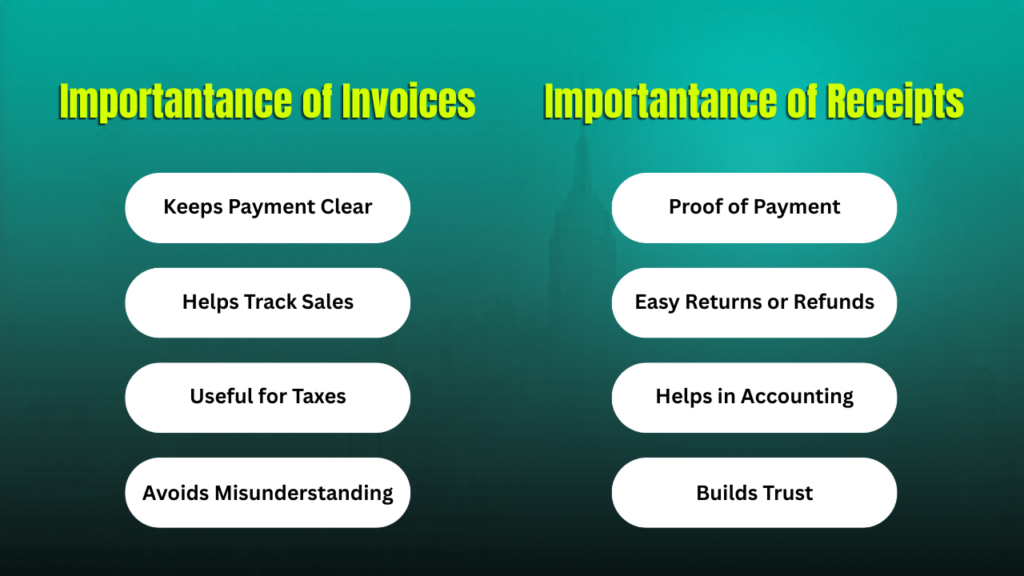
Why Are Invoices Important?

Invoices are essential documents for both businesses and customers, ensuring transparency, accountability, and proper record-keeping.

1. Keeps Payment Clear

Invoices clearly indicate how much money is owed, for which product or service, and the payment due date. This reduces confusion and ensures timely payment.

2. Helps Track Sales

Businesses can use invoices to monitor sales, track revenue, and identify outstanding payments. They are crucial for cash flow management.

3. Useful for Taxes

Invoices serve as official records for tax purposes. They help businesses report income accurately and claim deductions.

4. Avoids Misunderstanding

By detailing the product, service, price, and terms, invoices prevent disputes between the buyer and seller. Everything is documented in writing, leaving no room for confusion.

Why Are Receipts Important?

Receipts play a crucial role in both personal and business transactions. They serve as official confirmation that a payment has been made and help ensure transparency between buyers and sellers.

1. Proof of Payment

Customers can use receipts as solid proof if there is any issue later, such as disputes over payment or delivery. It acts as legal evidence that the transaction was completed.

2. Easy Returns or Refunds

Many shops require a receipt when returning a product or requesting a refund. Without a receipt, customers may face difficulties proving their purchase.

3. Helps in Accounting

Businesses rely on receipts to track completed transactions, maintain accurate financial records, and prepare reports. Proper documentation helps avoid confusion and errors in bookkeeping.

4. Builds Trust

Providing receipts shows professionalism and honesty. It reassures customers that the business operates transparently and values accountability.

Can an Invoice Become a Receipt?

Yes, sometimes an invoice can act like a receipt—but only if it is marked as “Paid”.

For example:

  • You send an invoice
  • The client pays
  • You update the invoice status to “Paid”

Now, that invoice can also serve as proof of payment.

However, many businesses still send a separate receipt for clarity.

Key Elements of an Invoice

A good invoice should include:

  • Invoice number
  • Date of issue
  • Seller details
  • Buyer details
  • Description of goods/services
  • Total amount
  • Payment terms (due date)

Adding these details makes your invoice professional and easy to understand.

Key Elements of a Receipt

A proper receipt should include:

  • Receipt number
  • Payment date
  • Amount paid
  • Payment method
  • Seller’s name
  • Buyer’s name

This ensures the receipt is valid and useful for records.

Invoice vs Receipt: Real-Life Example

Let’s look at a simple situation:

Scenario:

You go to a shop and buy a mobile phone.

Step 1: Invoice

The shop may first generate an invoice showing:

  • Phone price
  • Taxes
  • Total amount

Step 2: Payment

You pay the amount.

Step 3: Receipt

After payment, the shop gives you a receipt confirming:

  • You paid ₹20,000
  • Payment method (card/cash)
  • Date

Common Mistakes People Make

Many people confuse invoices and receipts. Here are some common billing mistakes:

1. Using Receipt Instead of Invoice

Some people send a receipt before receiving payment. This is incorrect.

2. Not Sending Receipts

After getting paid, failing to give a receipt can cause trust issues.

3. Missing Details

Invoices or receipts without proper details can create confusion later.

Invoice vs Receipt for Small Businesses

If you run a small business, understanding this difference is very important.

Use an Invoice When:

  • You provide services first and get paid later
  • You sell products on credit

Use a Receipt When:

  • You receive payment immediately
  • You want to confirm payment

Invoice vs Receipt for Freelancers

Freelancers often deal with both documents.

Workflow:

  1. Complete the work
  2. Send an invoice
  3. Receive payment
  4. Send a receipt

This process keeps everything clear and professional.

Frequently Asked Questions (FAQs)

1. Is an invoice proof of payment?

No. An invoice is a request for payment, not proof. For confirmation, an official receipt is needed. Compare billing invoice vs official receipt.

2. Is a receipt mandatory?

Often, yes. Receipts provide legal and financial proof, especially in businesses. This applies to cash bill vs receipt and cash invoice and official receipt situations.

3. Can I use digital invoices and receipts?

Yes. Most businesses and institutions widely accept digital documents. They also clarify cash invoice vs official receipt distinctions.

4. What if I lose a receipt?

You can request a duplicate from the seller. Keeping records is important for accounting and tax purposes.

5. Why distinguish invoices and receipts?

Invoices request payment; receipts confirm it. Knowing the difference prevents disputes and helps in audits and taxes.

are receipts and invoices the same thing

Final Thoughts

Understanding the difference between an invoice and a receipt is simple once you know the basics.

  • An invoice is sent before payment to request money.
  • A receipt is sent after payment to confirm money is received.

Both documents are important for smooth business operations, clear communication, and proper financial records. Using modern billing and accounting software like Kenfra BillPad can make creating, sending, and managing invoices and receipts fast and efficient. Whether you are a business owner, freelancer, or customer, knowing when to use each one will help you stay organized and avoid confusion.

Share this post

Leave a Reply

Your email address will not be published. Required fields are marked *