

Latest UGC Guidelines for PhD Scholars 2026 – Complete & Updated Guide
Kenfra Research - Bavithra2026-01-30T17:04:38+05:30The University Grants Commission (UGC) updates its regulations from time to time to ensure quality, transparency, and fairness in higher education in India. For PhD scholars, these guidelines are crucial as they determine everything from eligibility, admission process, research standards, supervision norms, and even scholarship opportunities.
In 2026, the UGC introduced new updates that aim to improve equity, inclusivity, and research quality. At the same time, some changes are currently under review, making it important for PhD aspirants to stay informed. This guide explains the latest UGC guidelines for PhD scholars in simple terms, helping you make the right decisions for your research career.
Core UGC PhD Guidelines That Still Apply
Even with new updates, the fundamental UGC PhD rules remain the backbone of doctoral programs:
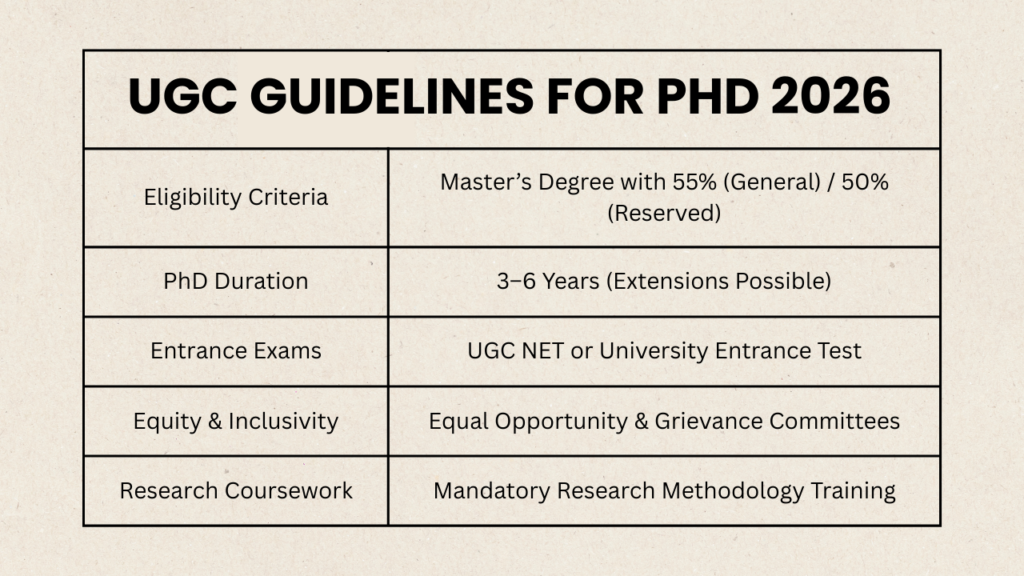
- Eligibility: Candidates must have Master’s degree in a relevant field with the minimum qualifying marks — usually 55% for general category and 50% for reserved categories.
- Programme Duration: The PhD program generally last 3–6 years, with the provisions for extensions based on university rules.
- Coursework Requirement: All PhD scholars must complete research methodology coursework during the initial stage of their program.
- Supervision Norms: Faculty supervising PhD scholars must meet certain eligibility criteria, ensuring quality guidance throughout the research journey.
These foundational guidelines ensure that all PhD programs maintain a high standard of research and academic integrity.
Equity and Inclusivity Regulations 2026
UGC has introduced equity-focused regulations for higher education institutions to promote a fair and inclusive environment. While some new 2026 guidelines are under review and temporarily stayed by the Supreme Court, universities are encouraged to:
- Maintain Equal Opportunity Committees to address grievances and ensure fair treatment.
- Provide formal grievance mechanisms for scholars facing discrimination or unfair practices.
- Monitor and report compliance with equity standards periodically.
While not all provisions are currently enforceable, understanding these recommendations is important for planning a safe and inclusive research experience.
PhD Admissions and Eligibility Updates
UGC NET and Entrance Exams
UGC NET remains a recognized eligibility criterion. Many universities now accept NET scores instead of separate entrance exams, simplifying the admission process for qualified candidates.
Part-Time and Professional PhDs
Working professionals can pursue part-time PhDs, subject to a No Objection Certificate (NOC) from their employer. This allows scholars to continue professional work while engaging in research.
Research and Publication Requirements
UGC does not mandate publication in journals for thesis submission. However, publishing research can enhance career prospects, increase chances of fellowships, and improve academic profiles.
PhD Progress, Supervision, and Financial Support
Duration, Progress, and Monitoring
- Minimum Duration: 3 years
- Maximum Duration: 6 years (extensions in exceptional cases)
- Progress Review: Scholars must submit annual progress reports to supervisors and university review committees.
- Milestones: Completion of coursework and periodic submission of research milestones is required.
Supervision and Mentorship
- Supervisors must have relevant research experience and qualifications.
- Universities may limit the number of scholars per supervisor to ensure effective guidance.
Scholarships and Financial Support
- Junior Research Fellowship (JRF): Available to NET-qualified candidates to support living and research expenses.
- University Scholarships and Grants: Many universities offer additional merit-based or need-based support, including funds for conferences and research travel.
Practical Tips for PhD Scholars in 2026 – Following UGC Guidelines for PhD
Understand Your University’s Guidelines
Always review your university’s PhD policy, as institutions may have additional requirements beyond the UGC guidelines for PhD. Knowing these rules early helps avoid delays in admission, coursework, or research progress.
Stay Updated
PhD scholars should regularly track official UGC notifications and updates to stay informed about the latest rules, amendments, and research compliance standards. Staying updated ensures that your research remains aligned with current UGC guidelines for PhD.
Focus on NET/JRF
Qualifying NET and applying for JRF not only strengthens your PhD admission chances but also provides financial support and better career opportunities in academia and research.
Plan Your Research Carefully
Understand research milestones, thesis submission timelines, and publication expectations early to ensure smooth progress. Effective planning in accordance with UGC guidelines for PhD prevents last-minute complications and ensures timely completion.
Frequently Asked Questions (FAQs) – UGC Guidelines 2026 for PhD Scholars
1. What are the latest UGC guidelines for PhD scholars in 2026?
The 2026 UGC guidelines focus on eligibility, admissions, research standards, supervision norms, and equity regulations. Scholars are required to complete coursework, periodic progress reviews, and maintain ethical research practices throughout their PhD journey.
2. Does Kenfra provide support for part-time PhDs?
Yes, Kenfra, one of the leading PhD consultancies in India, offers mentorship, research scheduling, and progress tracking for part-time PhDs. We ensure that scholars can balance their professional work with research efficiently while meeting UGC requirements.
3. Is UGC NET mandatory for PhD admission in 2026?
While UGC NET qualification is strongly recommended, some universities may accept other qualifications or conduct their own entrance tests. NET qualification can also help scholars secure Junior Research Fellowship (JRF), which provides financial support during research.
4. What is the eligibility criteria for PhD admission in 2026?
Candidates must have a Master’s degree in a relevant field with minimum qualifying marks: 55% for general category and 50% for reserved categories. UGC NET-qualified candidates are often given direct eligibility, while other candidates may need to clear university-level entrance exams.
5. How can Kenfra assist with thesis writing and publication?
Kenfra provides comprehensive thesis writing support, including editing, formatting, and plagiarism checking to meet UGC standards. We guide scholars in structuring their research effectively and preparing for university submission.

Conclusion – Your Roadmap for a Successful PhD in 2026
The UGC guidelines for PhD scholars in 2026 focus on:
- Maintaining high academic and research standards
- Ensuring equity, inclusivity, and fair treatment
- Streamlining admissions and supervision processes
- Encouraging publications and professional development
While some new regulations are under review, the core principles of eligibility, supervision, coursework, and research quality remain unchanged. By following these guidelines, PhD scholars can successfully navigate their research journey and achieve academic excellence.
At Kenfra Research, we are committed to helping PhD scholars understand, implement, and excel under the latest UGC guidelines. With expert guidance, personalized mentorship, and structured research support, we ensure your PhD journey is smooth, credible, and rewarding.







Leave a Reply