

Rejected? Revise & Rise: Turning Journal Rejections Into Wins
Kenfra Research - Bavithra2025-12-09T16:56:09+05:30Getting a journal article rejected can feel like a huge setback for any researcher, but it’s essential to remember that journal rejections are a normal part of the academic process. Instead of seeing it as the end of the road, it can be a stepping stone to improving your work and ultimately getting published. In this blog, we’ll discuss how to handle journal rejections, learn from them, and turn them into wins that will enhance your academic journey.
Why Journal Rejections Happen?
Understanding the reasons behind journal rejections is crucial to handling them effectively. Some common reasons for rejection include:
- Lack of relevance to the journal’s scope: Your research might not align with the journal’s target audience or area of focus.
- Insufficient novelty or contribution: The findings of your paper may not provide new insights or make a significant contribution to the field.
- Methodological flaws: If there are weaknesses in your research design or analysis, it can lead to rejection.
- Poor presentation or writing issues: Sometimes, rejection occurs due to language issues or a lack of clarity in presenting your research.
By identifying the reasons for rejection, you can take the necessary steps to improve your manuscript and increase its chances of acceptance in the future.
How to Handle Journal Rejections? Steps to Turn Rejection into Opportunity
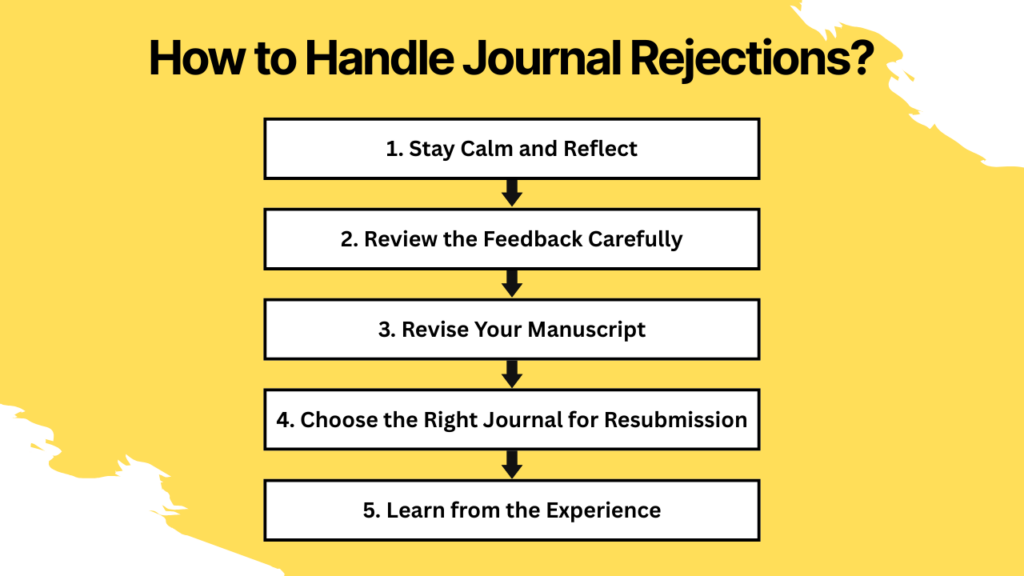
1. Stay Calm and Reflect
When you first receive a rejection letter, it’s natural to feel disappointed or even frustrated. However, it’s important to stay calm. Take some time to process your emotions and reflect on the feedback provided by the reviewers.
2. Review the Feedback Carefully
Most journals provide reviewers’ comments or suggestions for improvement. Read these comments carefully and take note of any recurring issues or themes. Reviewers are often experts in your field, and their feedback can offer valuable insights into how you can improve your paper.
3. Revise Your Manuscript
Use the feedback from reviewers to revise your paper. Focus on addressing the specific concerns they raised, whether it’s improving the methodology, enhancing the literature review, or making your arguments clearer. Be sure to make the necessary revisions, even if it means rethinking parts of your research.
4. Choose the Right Journal for Resubmission
When resubmitting your paper, make sure to choose a journal that is a good fit for your research. Take into consideration the journal’s scope, impact factor, and audience. Research journals that have a history of publishing work similar to yours to increase your chances of acceptance.
5. Learn from the Experience
Instead of viewing a journal rejection as a failure, try to see it as a learning experience. Every rejection gives you an opportunity to refine your work and improve your future submissions. Embrace the process and use the feedback as a tool for growth.
Common Myths about Journal Rejections
Myth 1: A Rejection Means Your Research is Not Good Enough
A rejection doesn’t mean your research lacks value. It could simply mean that it wasn’t a good fit for that particular journal at the time. Many successful researchers faced multiple rejections before their work was finally accepted.
Myth 2: You Can’t Resubmit to the Same Journal
While some journals may reject your paper outright, others might offer the option to resubmit after revisions. It’s worth checking the journal’s policy to see if this is an option for you. If the feedback is constructive, a resubmission could lead to eventual acceptance.
Myth 3: All Journals are the Same
Not all journals are created equal. Some journals may have higher acceptance rates, while others are more selective. Understanding the journal’s impact factor, target audience, and editorial standards can help you determine the best places to submit your work.

Frequently Asked Questions (FAQs)
1. What should I do if my paper is rejected with no feedback?
If you receive a rejection without feedback, don’t panic. You can reach out to the editor and politely ask for feedback on your submission. Many editors are willing to provide some insights into why your paper was rejected.
2. How do I know when to submit my paper to another journal?
Once you’ve made the necessary revisions based on feedback, and you feel confident that the manuscript is strong, it’s time to submit it to another journal. Don’t rush the process—take the time to ensure your paper is polished before resubmitting.
3. Can I submit the same manuscript to multiple journals at once?
It’s generally not advisable to submit the same manuscript to multiple journals simultaneously unless the journals explicitly allow it. It’s important to follow ethical guidelines when submitting your research.
4. How many times can I resubmit a paper after rejection?
There is no set limit on how many times you can resubmit a paper. However, after each rejection, take the time to carefully revise your paper and ensure it meets the journal’s requirements before resubmitting.
Conclusion
In academic publishing, how to Handle Journal Rejections is an essential skill every researcher must learn. Handling journal rejections is an inevitable part of the process. The key is not to let rejections discourage you. Instead, use the feedback as an opportunity to strengthen your paper, improve your research, and ultimately get it published. Remember, every rejection brings you one step closer to success.
At Kenfra Research, we understand how challenging the academic journey can be. We offer the best PhD assistance in Nagercoil, supporting researchers with everything from manuscript revisions to journal selection. Our goal is to help you navigate the complexities of publishing with confidence. Let us help you achieve your academic goals with expert guidance and complete PhD support.







Leave a Reply