

Step-by-Step Guide to Ethical Consent in Research for Beginners
Kenfra Research - Bavithra2026-03-20T17:14:29+05:30When you start doing research, one of the most important things you must learn is how to treat people fairly and respectfully. This is where ethical consent in research becomes very important. It helps protect the rights, safety, and dignity of participants. Even if your research is small, following proper consent rules shows responsibility and professionalism. This beginner-friendly guide will walk you through everything you need to know about ethical consent, step by step, in simple words.
What is Ethical Consent?
Ethical consent means getting clear permission from people before including them in your research. It ensures that participants understand what the research is about and agree to take part without pressure.
In research, this is often called informed consent in research ethics. It means participants know:
- What the study is about
- What they will be asked to do
- Any risks or benefits
- That they can leave anytime
Ethical consent is not just a formality—it is a key part of research ethics and informed consent practices.
Why is Ethical Consent Important?
Ethical consent is important for several reasons:
- Respect for Participants
It respects people’s freedom to choose whether to take part. - Protection from Harm
It helps reduce risks and ensures participants are aware of any possible harm. - Trust Building
It builds trust between the researcher and participants. - Legal and Academic Requirement
Many institutions require an ethical approval form for research before starting any study.
A Simple Step-by-Step Guide to Ethical Consent in Research
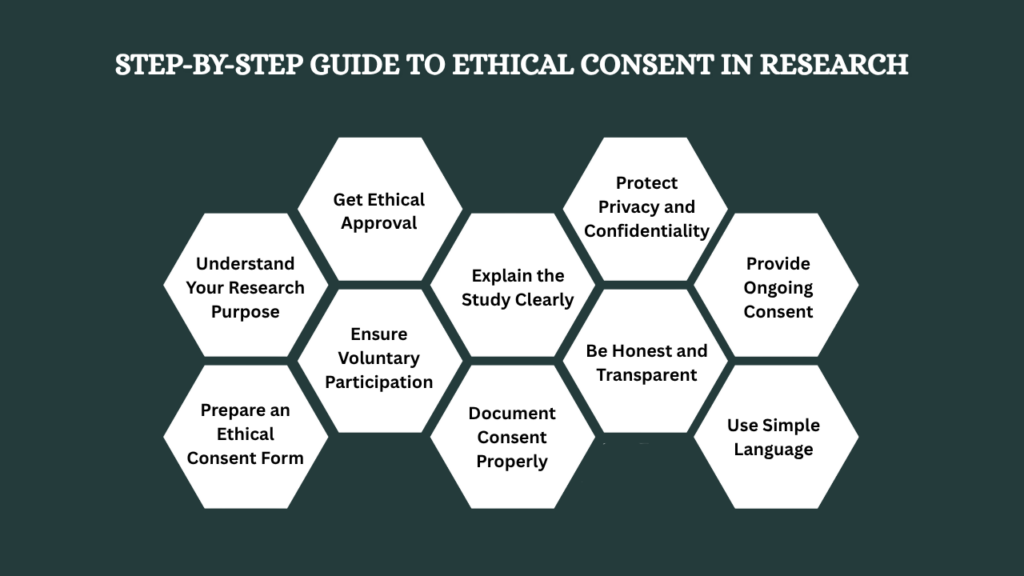
Step 1: Understand Your Research Purpose
Before asking for consent, you must clearly understand your own research. Ask yourself:
- What is the goal of the study?
- Who will be involved?
- What kind of data will you collect?
When you understand your research well, it becomes easier to explain it to participants. This clarity is essential for proper ethical consent.
Step 2: Get Ethical Approval
Most research projects require approval from an ethics committee or review board. You will usually need to submit an ethical approval form for research.
This form includes:
- Your research objectives
- Methodology
- Participant details
- Risk assessment
- Consent process
Getting approval ensures that your study follows ethical standards before you begin collecting data.
Step 3: Prepare an Ethical Consent Form
An ethical consent form for research is a document that participants read and sign before joining your study.
A good ethical consent form should include:
- Title of the research
- Purpose of the study
- What participants will do
- Duration of participation
- Risks and benefits
- Confidentiality details
- Contact information
- Statement of voluntary participation
Keep the language simple and easy to understand. Avoid technical or confusing terms.
Step 4: Explain the Study Clearly
Do not just give the form—explain it verbally as well. This is a key part of informed consent in research ethics. Make sure participants understand:
- What will happen during the study, including the specific research topics being explored
- Why their participation matters
- That they can ask questions
Take time to answer all questions honestly. This step helps ensure true ethical consent in research.
Step 5: Ensure Voluntary Participation
Participants should never feel forced or pressured to join. Ethical research requires that participation is completely voluntary.
You must clearly say:
- They can refuse to join
- They can leave anytime
- There will be no penalty for leaving
This is a core principle in research ethics and informed consent.
Step 6: Protect Privacy and Confidentiality
Participants need to know how their information will be used and protected.
You should:
- Keep personal data safe
- Avoid sharing identities without permission
- Use codes or anonymous data when possible
Mention these details in your ethical consent form for research so participants feel secure.
Step 7: Document Consent Properly
Once participants agree, you must record their consent. This can be done through:
- Signed forms
- Audio or video recordings (if appropriate)
- Online consent checkboxes
The ethical consent form acts as proof that participants agreed after understanding the study.
Step 8: Provide Ongoing Consent
Consent is not just a one-time process. Participants should feel comfortable throughout the study.
Check in with them:
- Ask if they are still comfortable
- Inform them of any changes in the study
- Remind them they can withdraw
This continuous process strengthens ethical consent in research.
Step 9: Be Honest and Transparent
Honesty is very important in research. Do not hide important information from participants.
If there are risks, clearly explain them. If there are no direct benefits, say that too. Transparency is a key part of informed consent in research ethics.
Step 10: Use Simple Language
Always use simple and clear language in both your explanation and documents.
Avoid:
- Technical jargon
- Complex sentences
- Confusing terms
Simple communication ensures participants truly understand, which is essential for ethical consent.
Example of Informed Consent
Here is a simple informed consent ethics example:
A student is doing research on study habits. Before collecting data, the student explains:
- The purpose of the study
- That participants will answer a short survey
- It will take 10 minutes
- Their answers will remain anonymous
- They can stop anytime
Participants read and sign an ethical consent form for research. This shows proper informed consent in research ethics.
Frequently Asked Questions
1. What is ethical consent in research?
Ethical consent in research means getting clear and voluntary permission from participants before including them in a study. It ensures they understand the purpose, risks, and their rights.
2. Why is informed consent important in research ethics?
Informed consent in research ethics is important because it protects participants, ensures transparency, and builds trust between researchers and participants.
3. What should be included in an ethical consent form for research?
An ethical consent form for research should include the study purpose, participant tasks, duration, risks, benefits, confidentiality details, and a statement of voluntary participation.
4. Is ethical approval required for all research studies?
Most academic and professional studies require an ethical approval form for research, especially when human participants are involved.

Conclusion
Ethical consent is the foundation of responsible research. It ensures that participants are respected, informed, and protected throughout the study. By following these steps—understanding your research, getting approval, preparing an ethical consent form for research, and ensuring voluntary participation—you can confidently conduct ethical research.
Remember, informed consent in research ethics is not just about paperwork. It is about honesty, respect, and responsibility. When done properly, it builds trust and improves the quality of your research. For additional guidance and expert support, platforms like Kenfra Research offer reliable PhD assistance in India, helping scholars understand ethical consent in research and complete their studies with confidence.








Leave a Reply