
UGC Sounds the Alarm: 3 Fake Universities Exposed, Students Urged to Stay Alert
Kenfra Research - Bavithra2025-12-19T17:25:08+05:30The University Grants Commission (UGC), the apex body that regulates higher education in India, has issued a crucial warning that every student, parent, and prospective employer should take seriously. This advisory is about certain unrecognized universities in India operating without the necessary legal approvals. The institutions in question are: NIMS University in Delhi, Sarva Bharatiya Shiksha Peeth in Karnataka, and National Backward Krushi Vidyapeeth in Maharashtra. These entities are offering and issuing degrees to students despite not having the authority to do so under Indian law.
As per the UGC’s official statement, degrees awarded by these institutions are invalid. This means that qualifications issued by such institutions are not recognized for further studies, government recruitment, or jobs in the private sector. This is a serious issue, as students who mistakenly enroll in these unapproved institutions may face significant challenges in their academic and professional careers.
Warning About Unrecognized Universities in India: Why is This a Concern?
The core issue lies in the fact that these institutions are misleading students by presenting themselves as legitimate universities. However, they do not meet the legal requirements set out under the UGC Act, 1956. According to Indian law, for any institution to be recognized as a university and to award degrees, it must either be:
- Listed under Section 2(f) of the UGC Act, which means it has been officially recognized by the UGC as an institution that can grant degrees.
- Declared a “Deemed University” under Section 3 of the same Act, which means the institution has been granted this status based on its contributions to higher education and research.
Institutions that fail to meet either of these criteria are not legally authorized to offer degrees, and any degree they confer is essentially worthless in the eyes of the government, universities, and employers. It is essential that students ensure the legitimacy of the institutions they choose before making any financial or academic commitments.
How Can Students Protect Themselves?
With the rising number of institutions claiming to be universities but lacking the necessary accreditation, it is more important than ever for students to conduct thorough research before making any academic decisions. Here are some practical steps students can take to ensure they are enrolling in a recognized and legitimate institution:
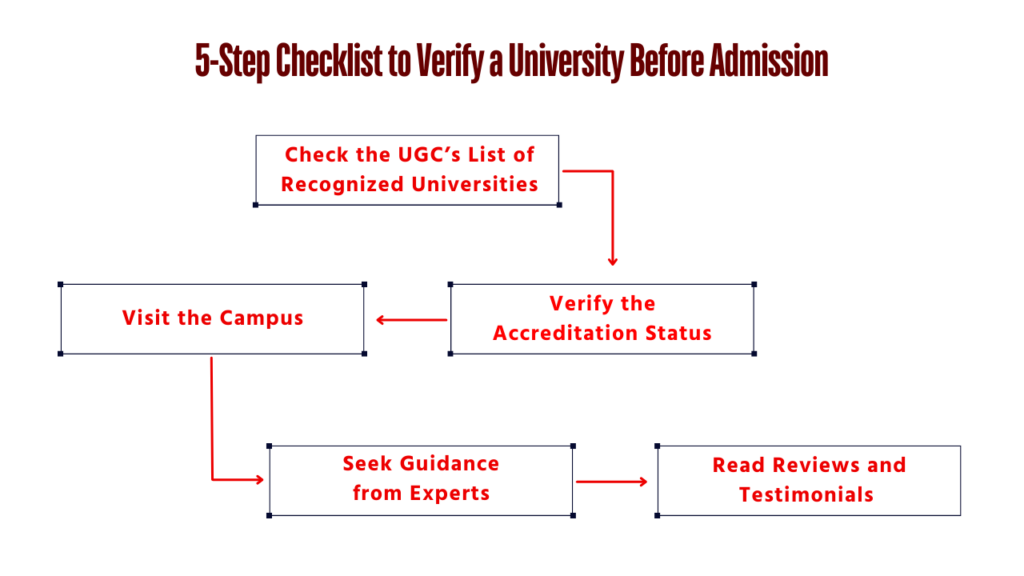
1. Check the UGC’s List of Recognized Universities
The UGC maintains an official list of universities that are legally recognized. This list is regularly updated and can be found on the UGC’s official website. Before enrolling in any university, check whether it is included in this list. If the institution is not listed, it does not have the authority to award degrees.
2. Verify the Accreditation Status
Some universities are listed under Section 2(f) of the UGC Act or declared “Deemed Universities” under Section 3. They may also have accreditation from specialized agencies. These accreditations may pertain to specific disciplines (e.g., engineering, medical sciences, etc.). Always verify whether the institution has proper accreditation from relevant bodies, such as the National Board of Accreditation (NBA) or the National Assessment and Accreditation Council (NAAC).
3. Visit the Campus
If possible, visit the institution before making any decisions. A visit can provide insight into the quality of the infrastructure, faculty, and overall academic environment. Be cautious of institutions that are reluctant to provide such visits or lack proper campus facilities.
4. Seek Guidance from Experts
If in doubt, speak with educational counselors, alumni, or professionals in your field of interest. They can provide guidance on the reputation and legitimacy of different institutions. This helps you make a more informed decision.
5. Read Reviews and Testimonials
One way to gauge the legitimacy and quality of an institution is by reading reviews or testimonials from students who have attended. While online reviews can be subjective, they can provide valuable insights into the institution’s academic standards and reputation.
Frequently Asked Questions (FAQ)
1. How can I check if a university is UGC-recognized?
Visit the official UGC website and check the list of recognized universities under Section 2(f) or Deemed Universities under Section 3.
2. Are degrees from unrecognized universities legally valid?
No. Such degrees have no legal value and can harm your academic and career prospects.
3. Is UGC recognition enough, or should I check accreditation too?
UGC recognition is essential, but you should also check accreditations like NAAC or NBA for quality assurance.
4. What should I do if I’m unsure about a university’s status?
Consult the UGC website, talk to education counselors, or seek advice from professionals before enrolling.

Conclusion
The UGC’s warning about unrecognized universities in India reminds students to be cautious. It encourages them to be diligent when choosing a higher education institution. As tempting as it may seem to join a university offering easy admission or attractive promises, the long-term consequences of attending an unrecognized institution can be detrimental to one’s academic and professional future.
By following the steps outlined above and choosing a legally accredited institution, you can protect your educational journey. This helps you avoid unrecognized and fraudulent entities. Remember: always verify the legitimacy of your chosen institution before enrolling, as your degree could determine your future opportunities. Stay informed with KENFRA Research, stay cautious, and make wise decisions for your education.








Leave a Reply