

15 Advantages of Cloud CRM Every Business Should Know
Kenfra Research - Bavithra2026-03-13T11:01:01+05:30Running a business means managing customers, sales, follow-ups, and support every day. When customer data is stored in different spreadsheets, emails, or notebooks, it becomes difficult to track everything properly. This is where Cloud CRM becomes very useful. Cloud CRM helps businesses store customer information in one online system. It allows teams to manage leads, track sales, communicate with customers, and analyze business performance from anywhere. In this blog, we will explain 15 advantages of Cloud CRM that every business should know.
15 Powerful Advantages of Cloud CRM for Modern Businesses
1. Access Your CRM Anywhere
One of the biggest benefits of cloud CRM is remote access. Your team can log in from anywhere using the internet. Sales teams can update leads while traveling, and managers can monitor sales performance from home or office. This flexibility improves productivity and decision-making.
2. Lower Upfront Costs
Traditional CRM systems require expensive hardware and IT setup. But cloud CRM works on a subscription model, which means businesses pay monthly or yearly. This reduces large upfront investments. Small businesses especially benefit from affordable cloud CRM solutions.
3. Easy Setup and Quick Implementation
Installing traditional CRM software can take weeks or months. But cloud CRM platforms are quick to set up. Most systems can be ready within a few hours or days. Businesses can start managing customers almost immediately.
4. Automatic Software Updates
With traditional software, companies must manually install updates. Cloud CRM providers handle automatic updates and maintenance. This means your business always uses the latest Cloud CRM features and security updates without extra work.
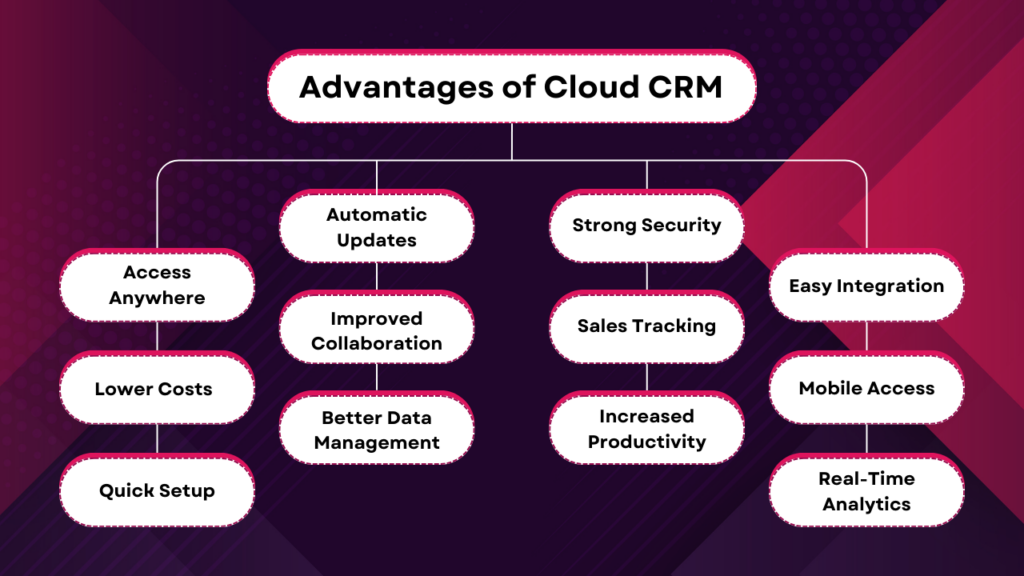
5. Improved Team Collaboration
Cloud CRM allows teams to work together more effectively. Employees can share notes, update customer information, and track communication in one place. Sales, marketing, and support teams can collaborate in real time. This improves communication and reduces mistakes.
6. Better Customer Data Management
Customer information is stored in a centralized database in cloud CRM systems.
Businesses can track:
- Contact details
- Purchase history
- Customer interactions
- Support requests
Having all data in one place helps companies understand customers better.
7. Strong Data Security
Many businesses worry about data security in the cloud, but top CRM providers invest heavily in protection.
Cloud CRM platforms use:
- Data encryption
- Secure servers
- Regular backups
This makes cloud CRM security stronger than many local systems.
8. Scalable for Business Growth
As your business grows, your CRM needs may increase. Cloud CRM systems are highly scalable. You can easily add new users, features, or storage without changing the entire system. This makes cloud CRM perfect for growing businesses and startups.
9. Better Sales Tracking
Cloud CRM helps sales teams manage leads and track deals more effectively.
Businesses can monitor:
- Sales pipelines
- Lead status
- Conversion rates
- Sales performance
This allows managers to identify opportunities and improve sales strategies.
10. Enhanced Customer Experience
When businesses understand their customers better, they can deliver better service. Cloud CRM provides detailed insights into customer preferences and behavior. This helps companies offer personalized customer experiences, faster responses, and better support.
11. Integration with Other Business Tools
Modern cloud CRM systems integrate easily with other tools such as:
- Email marketing platforms
- Accounting software
- E-commerce systems
- Social media tools
This creates a connected business ecosystem where all systems work together.
12. Mobile-Friendly Access
Most cloud CRM platforms provide mobile apps. Sales teams can access customer information, update leads, and schedule meetings directly from their smartphones. This improves sales efficiency and field productivity.
13. Real-Time Reporting and Analytics
Cloud CRM systems provide real-time reports and dashboards.
Managers can track key metrics like:
- Sales performance
- Customer engagement
- Marketing results
These insights help businesses make data-driven decisions.
14. Improved Marketing Automation
Many cloud CRM platforms include marketing automation tools.
Businesses can:
- Send automated emails
- Track customer behavior
- Segment audiences
- Run marketing campaigns
This helps companies reach the right customers at the right time.
15. Increased Productivity and Efficiency
When all customer data, sales activities, and communication are organized in one system, teams work more efficiently. Employees spend less time searching for information and more time building customer relationships. This leads to higher productivity and better business performance.
Frequently Asked Questions:
1. Is Cloud CRM secure?
Yes, most Cloud CRM providers use strong security measures such as data encryption, secure servers, and regular backups to protect customer information and business data.
2. How does Cloud CRM improve customer experience?
Cloud CRM stores customer history, interactions, and preferences in one place. This allows businesses to provide personalized service, respond faster to customer requests, and improve overall customer satisfaction.
3. What features are included in Cloud CRM software?
Cloud CRM software usually includes features such as contact management, sales tracking, lead management, marketing automation, reporting and analytics, and integration with other business tools.
4. Is Cloud CRM suitable for growing businesses?
Yes, Cloud CRM is highly scalable. Businesses can easily add more users, storage, and features as their company grows, making it ideal for startups and expanding organizations.
5. Why should businesses use Kenfra CRM?
Businesses should choose Kenfra CRM because it helps manage leads, track sales activities, and organize customer information in one place. It also improves team collaboration, automates routine tasks, and provides useful insights through reports and analytics.

Final Thoughts
Cloud CRM has become an essential tool for modern businesses. It helps companies manage customer relationships, improve sales performance, and streamline operations. From remote access and lower costs to better analytics and automation, cloud CRM provides many advantages that help businesses stay competitive.
If your company wants to improve customer management and grow faster, investing in a reliable cloud CRM solution like Kenfra CRM, the best CRM software for small businesses, can be a smart decision. Kenfra CRM helps businesses manage leads, track sales activities, organize customer data, and improve team collaboration in one simple platform.









Leave a Reply