

90% of People Make These Budgeting Mistakes
Kenfra Research - Bavithra2026-04-02T17:22:05+05:30Most people think they are managing their money well. But the truth is, budgeting mistakes are far more common than you think. In fact, studies show that a large number of people — nearly 90% — are making at least one or two serious budgeting mistakes without even realizing it. Once you know what you are doing wrong, fixing it is easier than you think. Let’s look at the most common money management mistakes and how you can avoid them starting today.
What Are Budgeting Mistakes and Why Do They Matter?
A budgeting mistake is any habit or behavior that stops you from saving money, paying off debt, or reaching your financial goals. These mistakes do not always feel obvious. Sometimes they are small habits, like spending a little extra each week. Over time, these small habits can add up to big financial problems. Understanding common budgeting mistakes is the first step toward taking control of your money — and using a good finance app can make that first step even easier.
10 Common Budgeting Mistakes and How to Avoid Them
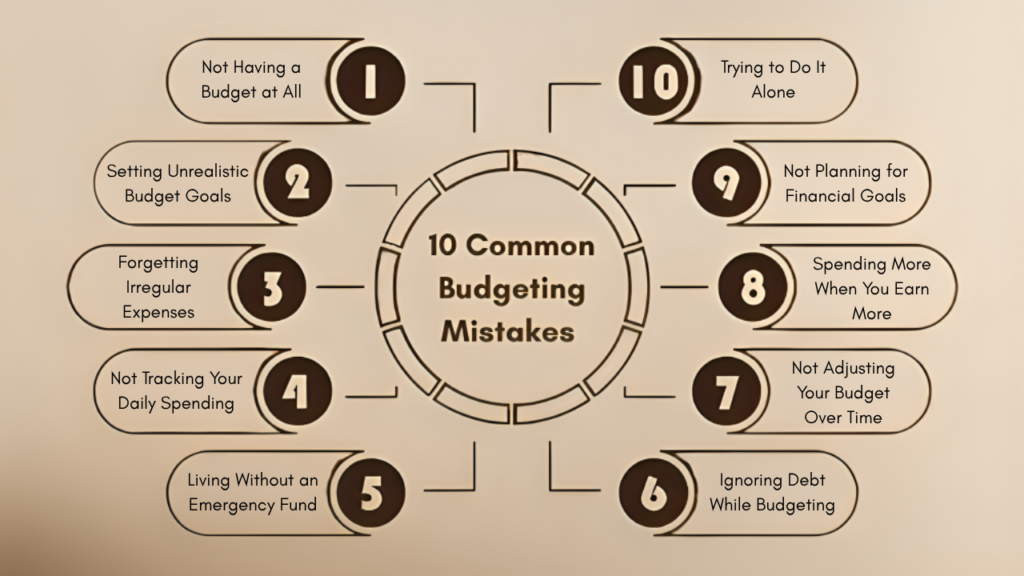
Mistake #1: Not Having a Budget at All
This is the number one mistake in personal finance. Many people go through the month spending money without any plan. They only realize there is a problem when the money runs out before the end of the month.
How to fix it: Write down your monthly income and all your expenses. Even a simple list on paper is better than no plan at all. There are also many free budgeting apps that make this easy.
Mistake #2: Setting Unrealistic Budget Goals
Some people create a very strict budget and expect to follow it perfectly. When they fail even once, they give up on the whole plan. This is one of the most common budgeting mistakes people make.
How to fix it: Set realistic and flexible goals. Allow yourself some spending money for fun. A budget that is too tight will not last long.
Mistake #3: Forgetting Irregular Expenses
Many people budget only for monthly bills like rent and electricity. But what about yearly expenses like car insurance, school fees, or medical checkups? These irregular expenses can break your budget if you are not ready for them.
How to fix it: Make a list of all the expenses that do not happen every month. Divide the total by 12 and set aside that amount each month. This way, you will always be ready.
Mistake #4: Not Tracking Your Daily Spending
Even if you have a budget, it will not help if you are not tracking where your money actually goes. Many people are shocked when they look at how much they spend on small things — like coffee, snacks, or online subscriptions.
How to fix it: Track every purchase for one full month. Use a notebook, a spreadsheet, or a money management app. You will quickly see where you can cut back and save more.
Mistake #5: Living Without an Emergency Fund
One of the biggest money mistakes people make is spending all they earn without keeping any savings for emergencies. When something unexpected happens — like a car repair or medical bill — they end up in debt.
How to fix it: Start small. Even saving a little each month can build an emergency fund over time. Try to build up at least 3 months of expenses in a separate savings account.
Mistake #6: Ignoring Debt While Budgeting
Many people create a budget but forget to include debt payments — like credit card bills, loans, or buy-now-pay-later purchases. This is a major personal finance mistake that keeps people stuck in a cycle of debt.
How to fix it: Include all your debt repayments in your monthly budget. Focus on paying off high-interest debt first. This will save you money in the long run
Mistake #7: Not Adjusting Your Budget Over Time
Life changes. Your income may go up or down. Your expenses will change. A budget you made one year ago may not work for you today. Sticking to an old budget without updating it is another common money management mistake.
How to fix it: Review your budget every month. Check if anything has changed and update your numbers. A budget is a living plan — it should grow and change with you.
Mistake #8: Spending More When You Earn More
This is called lifestyle inflation. When people get a raise or a bonus, they start spending more — on a bigger apartment, a newer phone, or more expensive food. Their spending grows as fast as their income, and they never actually get ahead.
How to fix it: When your income increases, increase your savings first. Try to keep your living expenses the same and put the extra money toward financial goals like investing or building an emergency fund.
Mistake #9: Not Planning for Financial Goals
A budget without a goal is just a list of numbers. Many people forget to set clear financial goals — like saving for a house, paying off a loan, or planning for retirement. Without goals, it is hard to stay motivated.
How to fix it: Write down 2 or 3 clear financial goals. Set a timeline for each one. Then build your budget around those goals. This will give your budget a real purpose.
Mistake #10: Trying to Do It Alone
Many people feel embarrassed to talk about money. They try to manage everything by themselves, even when they are struggling. This is a mistake that keeps people from getting the help they need.
How to fix it: Talk to a trusted family member, friend, or a financial advisor. There is no shame in asking for help. In fact, getting support is one of the smartest money habits you can build.
Frequently Asked Questions:
1. What are the most common budgeting mistakes people make?
The most common budgeting mistakes include not having a budget at all, forgetting irregular expenses, not tracking daily spending, ignoring debt, and spending more as income increases.
2. Why do most people fail at budgeting?
Most people fail at budgeting because they set unrealistic goals, do not track their spending, and never update their budget as their life changes.
3. What is lifestyle inflation in budgeting?
Lifestyle inflation means spending more money as you earn more. Instead of saving the extra income, people upgrade their lifestyle — which stops them from building real wealth.
4. What is an emergency fund and why is it important?
An emergency fund is money saved separately for unexpected expenses like medical bills or car repairs. Without it, people often go into debt when surprises happen.
5. How often should I review and update my budget?
You should review your budget every month. Update it whenever your income, expenses, or financial goals change.

Conclusion: Take Control of Your Money Today
Avoiding budgeting mistakes is not about being perfect. It is about being aware. Now that you know the most common personal finance mistakes, you have the power to change your habits and build a better financial future.
Whether you are just starting out or have been struggling with your finances for years, it is never too late to reset and begin again. Small changes in how you manage your money today can make a huge difference in your life tomorrow.
If you are looking for a trusted finance app to guide you on managing your money and building a stronger financial future, Kenfra Finstar is here to help. With expert financial advice and practical tools, Kenfra Finstar supports you every step of the way on your journey to financial freedom.











Leave a Reply