
How to Create a Monthly Budget in 2026: Step-by-Step Guide
Kenfra Research - Bavithra2026-03-23T09:53:42+05:30Managing your money can feel overwhelming, especially if you don’t have a clear plan. Creating a monthly budget is one of the best ways to take control of your finances, save money, and reduce stress. In this guide, we’ll walk you through how to create a monthly budget in 2026, using simple steps and tools you already have.
Whether you’re a beginner or just looking to improve your money habits, this guide will show you exactly how to make a monthly budget that works for you.
Why You Need a Monthly Budget?
Before diving into the process, let’s quickly understand why a monthly budget is essential:
- Track your spending: Know exactly where your money goes each month.
- Save for the future: Allocate funds for emergencies, vacations, or big purchases.
- Reduce debt: Plan to pay off loans and credit card balances faster.
- Financial peace: Reduce money stress by knowing your limits and priorities.
With a good budget, you can take control of your finances instead of letting your money control you.
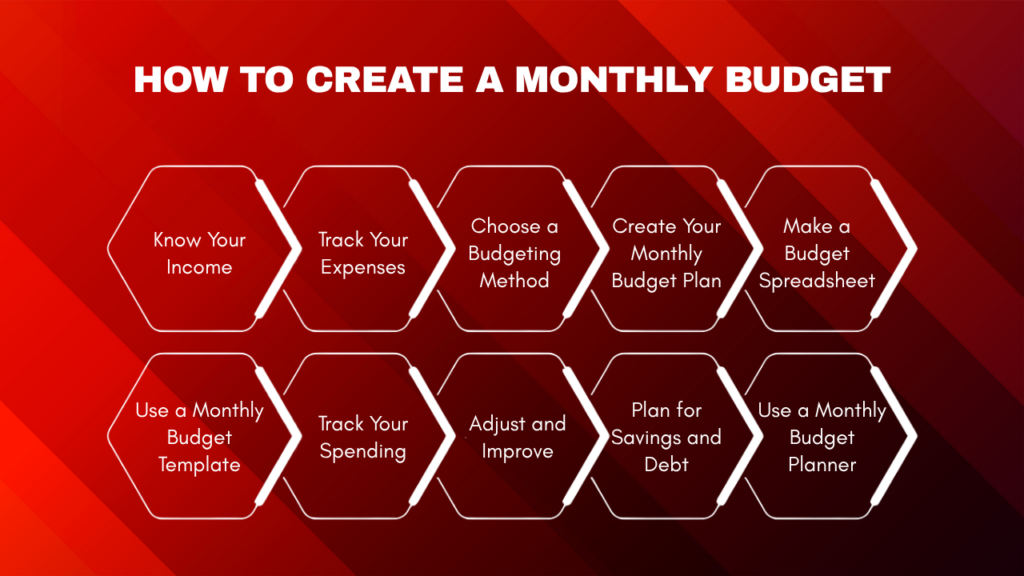
Step-by-Step Guide: How to Create a Monthly Budget That Works in 2026
Step 1: Know Your Income
The first step in how to create a monthly budget is to understand your income. This includes your salary, side hustle earnings, freelance income, and any other sources of money you regularly receive.
- List all sources of income.
- Use your net income (after taxes) as the amount to work with.
Knowing exactly how much money you have each month is the foundation of a successful budget.
Step 2: Track Your Expenses
Next, you need to see where your money is going. Start by tracking your expenses for at least a month. Divide your spending into categories such as:
- Rent or mortgage
- Utilities
- Groceries
- Transportation
- Entertainment
- Savings and investments
Once you know your spending patterns, it’s easier to see areas where you can cut back. This step is essential for how to create a monthly budget that works for you.
Step 3: Choose a Budgeting Method
There are many ways to budget. Here are some popular methods:
- 50/30/20 Rule: 50% for needs, 30% for wants, 20% for savings.
- Zero-Based Budgeting: Every dollar is assigned a purpose, leaving zero unallocated money.
- Envelope System: Use cash for each category to limit spending.
Pick a method that feels realistic and sustainable. The key is to find a system that suits your lifestyle.
Step 4: Create Your Monthly Budget Plan
Once you know your income, expenses, and method, it’s time to create a monthly budget plan. Start by assigning amounts to each category based on your goals. Include:
- Savings targets
- Debt repayment
- Emergency fund contributions
- Daily living expenses
Be realistic. A budget is only effective if you can follow it consistently.
Step 5: Make a Budget Spreadsheet
Spreadsheets are one of the easiest ways to manage your budget. You can create one yourself or use a ready-made template.
- If you want to know how to create a monthly budget in Excel, open a new workbook and list your income and expense categories in rows. Use formulas to calculate totals and track differences.
- For those asking how to create a monthly budget in Google Sheets, the process is similar, and the added benefit is that you can access it from anywhere.
A spreadsheet allows you to easily update your numbers and see if you are staying on track.
Step 6: Use a Monthly Budget Template
If you’re unsure where to start, a template can save time. Look for a simple template that includes:
- Income and expenses columns
- Savings goals
- Debt repayment tracker
- Monthly summary
Templates make how to create a monthly budget for beginners much easier. You can always customize them to fit your personal situation.
Step 7: Track Your Spending
Creating a budget is just the start. To make it work, you need to track your spending throughout the month.
- Record all expenses daily or weekly
- Compare actual spending with your budget
- Adjust categories if necessary
For example, if you want how to create a monthly budget tracker in Excel, add a column for actual spending next to each category in your spreadsheet. This helps you stay on top of your finances and prevents overspending.
Step 8: Adjust and Improve
No budget is perfect from the beginning. At the end of each month:
- Review your spending
- Identify areas for improvement
- Adjust your budget for the next month
This is an important step in how to create a monthly budget that works. The goal is to create a budget that is realistic, flexible, and tailored to your life.
Step 9: Plan for Savings and Debt
A good budget always includes money for savings and debt repayment. Decide how much you want to save each month and stick to it. You can also use your budget to:
- Pay off high-interest debt first
- Build an emergency fund
- Save for long-term goals like a house, car, or retirement
This is a key step in how to create a monthly budget and save money effectively.
Step 10: Use a Monthly Budget Planner
Some people prefer a more visual or printed approach. A monthly budget planner can help you:
- Write down goals
- Track spending visually
- Review progress at a glance
Whether you use a digital spreadsheet or a physical planner, consistency is what makes budgeting work.
Quick Tips for a Budget That Works
- Be honest about your spending habits
- Include small indulgences so your budget is sustainable
- Revisit your budget every few months
- Focus on long-term goals, not just monthly numbers
By following these finance tips, you’ll learn how to create a monthly budget that works for you, rather than following a generic template that doesn’t fit your lifestyle.

Conclusion
Learning how to create a monthly budget doesn’t have to be complicated. By following these steps—tracking income, planning expenses, creating a spreadsheet or template, and monitoring your spending—you can take control of your finances in 2026. If you need a free trial finance app to help manage your budget, you can try Kenfra Finstar, which makes tracking your money simple and convenient. Remember, the best budget is one that you can stick to, adjust, and use to meet your personal goals. Start small, stay consistent, and watch your financial confidence grow.











Leave a Reply