

Literature Survey Format for IEEE Paper
Kenfra Research - Bavithra2026-02-05T17:13:06+05:30Writing a literature survey for an IEEE paper can feel overwhelming at first, especially if you are new to research writing. But with a clear understanding of its meaning, purpose, and format, you can create a strong foundation for your research paper. This guide explains everything in simple words, including examples and tips that help you write a high-quality literature review.
What is a Literature Survey?
A literature survey is a critical part of any research paper. It helps you understand what work has already been done in your field and highlights the gaps that your study can fill. In simple words, a literature survey meaning is to summarize, analyze, and compare previous research so that readers can see the importance of your work.
In projects, a literature survey in project helps identify the tools, methods, and techniques used in earlier studies. It ensures your project builds upon solid existing knowledge instead of repeating past work.
Why is a Literature Survey Important?
A well-prepared literature survey in research serves several purposes:
- Shows your understanding of the topic.
- Identifies gaps and limitations in past studies.
- Helps justify the research problem in your research paper.
- Provides references for research writing and further study.
In an IEEE paper, a clear literature survey format can make your work more credible and increase the chances of acceptance.
Structure of Literature Survey for IEEE Paper
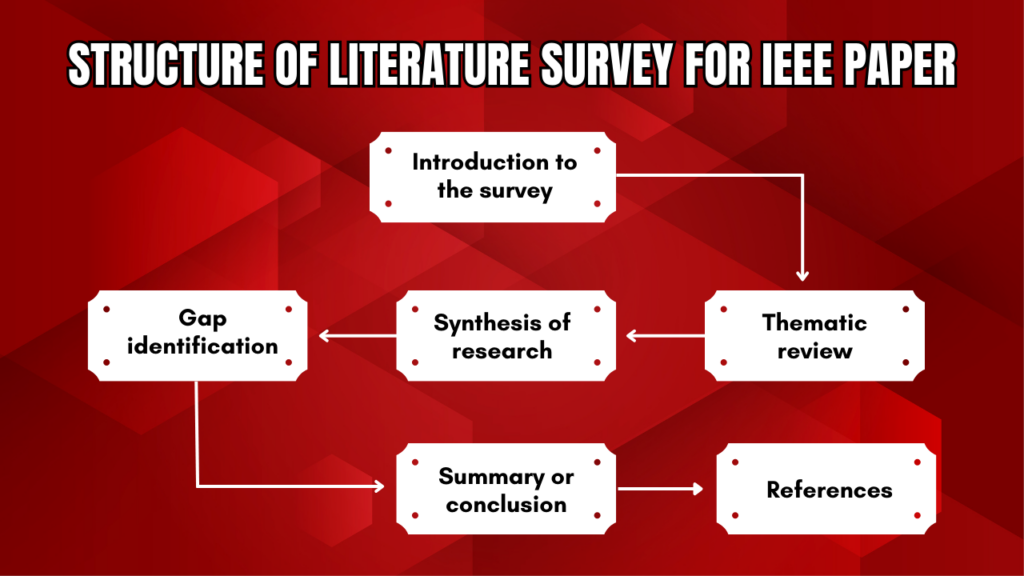
Here’s a simple literature survey format to follow:
- Introduction to the survey
- Thematic or chronological review
- Analysis and synthesis of research
- Gap identification
- Summary or conclusion
- References
This structure ensures your literature review is organized, readable, and effective.
1. Introduction to the Literature Survey
In this section, introduce the topic and explain why it is important. You can include the main themes or areas your survey will cover. For example, in a project about wireless networks, your introduction may explain the focus on energy efficiency, security, and data transmission.
A short, clear introduction sets the stage for the literature survey in project or research. Avoid writing lengthy descriptions that confuse the reader.
2. Thematic or Chronological Review
There are two ways to organize a literature survey:
A. Thematic Approach
Group previous studies based on themes. For instance:
- Energy management techniques
- Routing protocols
- Security methods
This helps readers easily compare related studies.
B. Chronological Approach
List studies based on publication year, showing how research has progressed over time.
For each study, mention the author, publication year, key findings, and any limitations. This shows you can critically read and summarize previous work.
3. Analysis and Synthesis
A literature review in research is more than summarizing. You need to analyze and synthesize previous work. Compare methods, results, and outcomes to show:
- Similarities and differences between studies
- Which methods worked better and why
- Any conflicting results
For example, if two studies use different routing methods, explain which was more effective and the reasons behind it. This demonstrates critical thinking and strengthens your research paper.
4. Gap Identification
Identifying gaps is a crucial part of writing a literature review. Here you explain:
- Problems that have not been solved
- Research questions still open
- Why these gaps matter for your project or research
This naturally leads to your research objectives. Without this step, a literature survey sample would only summarize existing work without contributing anything new.
5. Summary / Conclusion
After reviewing past studies, summarize the key points. Highlight trends, main findings, and research gaps. This section connects your survey to your own research paper or project goals.
Example:
“Existing studies improved energy efficiency and routing in sensor networks. However, challenges in real-time performance and security remain. The proposed study addresses these gaps by designing a hybrid protocol for reliable and efficient data transmission.”
6. References in IEEE Format
Citing your sources is essential. Use IEEE reference format and include all papers mentioned in your literature review example.
Tips:
- Maintain consistent formatting
- List references in the order cited
- Use recent and relevant studies for credibility
A proper literature survey sample always ends with accurate references, which strengthens your research paper format.
Tips for Writing an Effective Literature Survey
- Use subheadings to organize themes or years.
- Be critical, not just descriptive.
- Focus on relevant studies.
- Cite recent research for credibility.
- Maintain IEEE citation style consistently.
- Keep language simple and precise for clear research writing.
Avoid common mistakes like just listing papers without analysis, copying text directly, or skipping gap identification.

Example Paragraph of a Literature Survey
“Several authors studied routing protocols in wireless networks. X. Li proposed an energy-efficient method that reduces power use but increases latency [3]. Y. Singh introduced a cluster-based approach improving network lifetime but with less reliability [5]. Despite these improvements, no study fully balances energy efficiency and reliable data transmission, which motivates the present research.”
This short paragraph demonstrates how to integrate analysis, comparison, and gap identification naturally.
Frequently Asked Questions
1. What is a literature survey?
A literature survey is a review of existing research on a topic. It summarizes, analyzes, and identifies gaps in past studies to set the context for new research.
2. Why is a literature survey important in a research paper?
It shows your understanding of the topic, identifies research gaps, and strengthens the credibility of your study. It’s a key part of IEEE papers and project work.
3. Where can I get help with writing a literature survey?
You can consult professional research support services like Kenfra Research offer guidance on writing high-quality surveys and reviews.
4. How do I write a literature survey for an IEEE paper?
Follow a structured format: introduction, thematic or chronological review, analysis and synthesis, gap identification, summary, and references in IEEE style.
5. What is the difference between a literature review and a literature survey?
Both terms are similar, but a literature survey is usually more focused on summarizing existing research and identifying gaps, while a literature review can include deeper critical analysis and synthesis.
6. Can I find literature survey examples and templates online?
Yes. Many academic websites, IEEE guides, and research consultation platforms like Kenfra Research offer literature review samples and templates.
Conclusion
A well-written literature survey is the backbone of any IEEE paper or research paper. Following this simple literature survey format helps you:
- Understand research trends
- Identify gaps
- Build a strong foundation for your study
By using structured research writing methods, examples, and templates, you can prepare a high-quality literature review in research or literature survey in project.
For expert support in preparing high-quality literature surveys, students and researchers can consult Kenfra Research, while our Online PhD Research Consultation offers personalized guidance to craft impactful literature reviews for IEEE publications.







Leave a Reply