

PhD Synopsis Format 2026: Step-by-Step Guide for PhD scholars
Kenfra Research - Bavithra2026-02-03T16:10:12+05:30A PhD synopsis is a short, structured summary of your research plan that outlines what you want to study, why it is important, and how you will complete your research. The PhD Synopsis Format 2026 provides a clear roadmap for your doctoral journey, helping supervisors and research committees evaluate the feasibility and originality of your study. Following the correct PhD synopsis format ensures your proposal is well-organized, highlights the research gap, and demonstrates the significance of your work. Whether you are planning to register for a PhD or submit your research proposal, understanding this format is essential for approval and successful thesis development.
Many scholars search online for PhD synopsis format 2026 PDF, how to write PhD synopsis, PhD proposal format, and PhD synopsis sample. This guide answers all these questions and provides a step-by-step approach to preparing a high-quality PhD synopsis.
What Is a PhD Synopsis?
A PhD synopsis is a short document that gives a clear idea about your research work. It explains what you want to study, why the topic is important, and how you will complete the research. Many universities treat the synopsis as a research roadmap. Once approved, your full thesis will be developed based on this document. That is why following the correct phd synopsis format is very important for every PhD scholar.
PhD Synopsis Format 2026
Most universities follow a similar structure, though small changes may exist. Many institutions still align their evaluation with ugc guidelines for phd synopsis format, which focus on research ethics, clarity, and methodology. A PhD synopsis is a structured plan of your research. The general structure followed in 2026 includes:
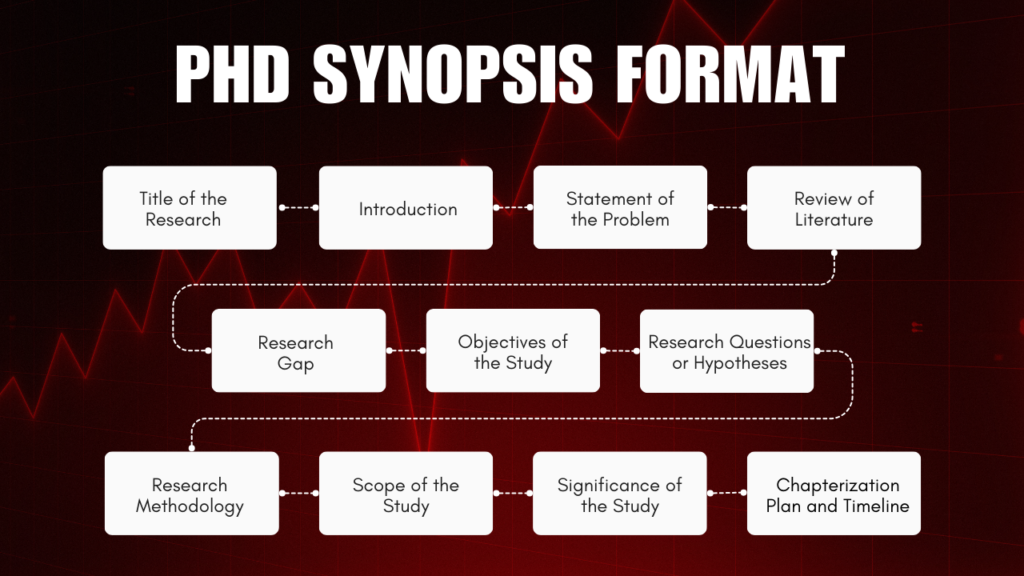
Title of the Research
The title of the research is the first thing that captures the attention of your evaluators. It should be concise, specific, and clearly reflect your research topic. Avoid long and vague titles. A good title gives a clear idea of what your study is about and makes it easy for reviewers to understand the focus of your work at a glance. For example, “Impact of Artificial Intelligence on Student Learning in Higher Education” is clear and precise.
Introduction
The introduction provides the background of your research. Here, you explain why the topic is important and set the context for your study. It gives an overview of the subject area, current trends, and the main issues in the field. The introduction should be written in simple language, avoiding overly technical terms, so that anyone reading your synopsis can understand the purpose of your research.
Statement of the Problem
The statement of the problem clearly defines the research issue your study aims to solve. This section identify the research gap or limitation in existing research that your work intends to address. A well-written problem statement explains why the research is necessary and what specific questions or issues need investigation. It forms the foundation for the objectives and methodology of your study.
Review of Literature
The review of literature summarizes existing studies related to your research topic. It highlights the key findings of previous research and identifies gaps or limitations that your study can address. The literature review should be well-structured and relevant, showing that you have understood the existing body of knowledge. It also helps justify the significance of your research in the current academic context.
Research Gap
The research gap explains what previous studies have missed or not explored in depth. This section shows the originality of your work by identifying areas that require further investigation. Clearly articulating the research gap demonstrates that your study will contribute new knowledge to your field and helps evaluators understand the importance of your research.
Objectives of the Study
The objectives of the study define the goals you aim to achieve through your research. They should be specific, measurable, and realistic. Usually presented in bullet points, these objectives guide the entire research process and ensure that your work remains focused. Clear objectives also make it easier for evaluators to assess the feasibility of your study.
Research Questions or Hypotheses
Depending on the type of research, you will include research questions or hypotheses in this section. Qualitative studies typically focus on research questions, while quantitative studies may formulate hypotheses to test. This section explains what your research seeks to answer or prove, providing a clear direction for your research methodology and analysis.
Research Methodology
The research methodology describes how you will conduct your study. It includes the type of research (qualitative, quantitative, or mixed), the sample size and selection method, the tools for data collection, and the techniques for data analysis. A detailed methodology assures reviewers that your research plan is practical and achievable, and it serves as a roadmap for the execution of your study.
Scope of the Study
The scope of the study defines the boundaries of your research. It specifies what your research will cover, including the geographical area, time period, and target population. Defining the scope helps evaluators understand the limitations and reach of your study and ensures that your research objectives are realistic and focused.
Significance of the Study
The importance of your research is explained by the study’s significance. It highlights the potential contributions to knowledge, society, academics, or industry. This section emphasizes the value of your research and why it deserves approval, demonstrating how your work will fill existing gaps and create meaningful impact.
Limitations of the Study
Every research has limitations, and this section addresses them honestly. You can mention constraints such as time, resources, access to data, or sample size. Being transparent about limitations increases the credibility of your work and helps reviewers understand the context in which your research will be conducted.
Chapterization Plan and Timeline
The chapterization plan outlines the tentative structure of your thesis. It gives reviewers an idea of how you will organize your research from introduction to conclusion. A typical chapterization includes: Chapter 1: Introduction, Chapter 2: Literature Review, Chapter 3: Methodology, Chapter 4: Data Analysis, and Chapter 5: Findings and Conclusion. This plan ensures logical flow and coherence in your study. The research timeline presents a semester-wise or year-wise schedule for completing different stages of your research.
Frequently Asked Questions
1. What is a PhD synopsis and why is it important?
A PhD synopsis is a short, structured summary of your research plan. It is important because it helps supervisors and research committees understand your study, evaluate feasibility, and approve your research topic.
2. How do I write a PhD synopsis in 2026?
Follow a clear phd synopsis format with sections like title, introduction, problem statement, objectives, methodology, and references. Refer to ugc guidelines for phd synopsis format to ensure compliance.
3. How can Kenfra Research help with my PhD synopsis and research?
Kenfra Research, a leading Phd research consultancy in India, provides expert guidance on preparing your synopsis, defining research objectives, and planning methodology. They also offer phd consultancy and phd service for scholars across all disciplines.
4. Can I submit a pre-PhD synopsis for feedback?
Yes, many universities encourage submitting a pre phd synopsis format to get preliminary feedback from your supervisor or research committee before the final submission.
5. Are older formats like VTU PhD synopsis format 2015 still useful?
Yes, older formats like the vtu phd synopsis format 2015 are helpful references for chapterization, methodology layout, and understanding how to structure your synopsis effectively.

Conclusion
A well-prepared PhD synopsis is the foundation of a successful doctoral journey. Following the correct phd synopsis format ensures clarity, originality, and approval from the research committee. For students looking for professional guidance, Kenfra Research the best PhD research consultancy in India offers expert support in preparing synopses, methodology, literature review, and complete research planning. Their team helps scholars across disciplines ensure their PhD work is well-structured, original, and aligned with university standards.









Leave a Reply