Investment Strategies

Smart Investment Strategies: Your Guide to Maximizing Returns

Investment Strategies are one of the most effective ways to build long-term wealth and achieve financial security. In today’s fast-changing financial environment, simply saving money is not enough to stay ahead of inflation or meet future financial goals. Smart investment strategies allow individuals to grow their money steadily while managing risks in a disciplined manner, making Investment Strategies essential for long-term success.

This guide explains practical, proven methods to help you invest wisely, avoid common mistakes, and maximize your returns over time.

Why Smart Investment Strategies Matter?

Many people invest without a clear plan, often influenced by trends or emotions. However, successful investing is about discipline and strategy, not luck.

Smart investment strategies help you:

  • Reduce unnecessary risks
  • Achieve consistent returns
  • Protect your wealth from inflation
  • Stay focused on long-term goals

When you invest with a strategy, you make informed decisions instead of emotional ones.

Understanding Your Financial Goals

Before you start investing, it is essential to define your financial goals. Your investment decisions should always align with what you want to achieve in the future.

There are three main types of financial goals:

  • Short-term goals (1–3 years): Emergency fund, travel, buying gadgets
  • Medium-term goals (3–7 years): Education, buying a house
  • Long-term goals (7+ years): Retirement, wealth creation

A clear goal helps you choose the right investment strategy and risk level.

The Importance of Diversification

Diversification is one of the most important principles in investing. It means spreading your money across different types of investments to reduce risk.

Instead of investing in just one asset, you can diversify across:

  • Stocks
  • Bonds
  • Mutual funds
  • Real estate
  • Gold or commodities

Diversification helps balance your portfolio. If one investment performs poorly, others may perform better and reduce overall losses.

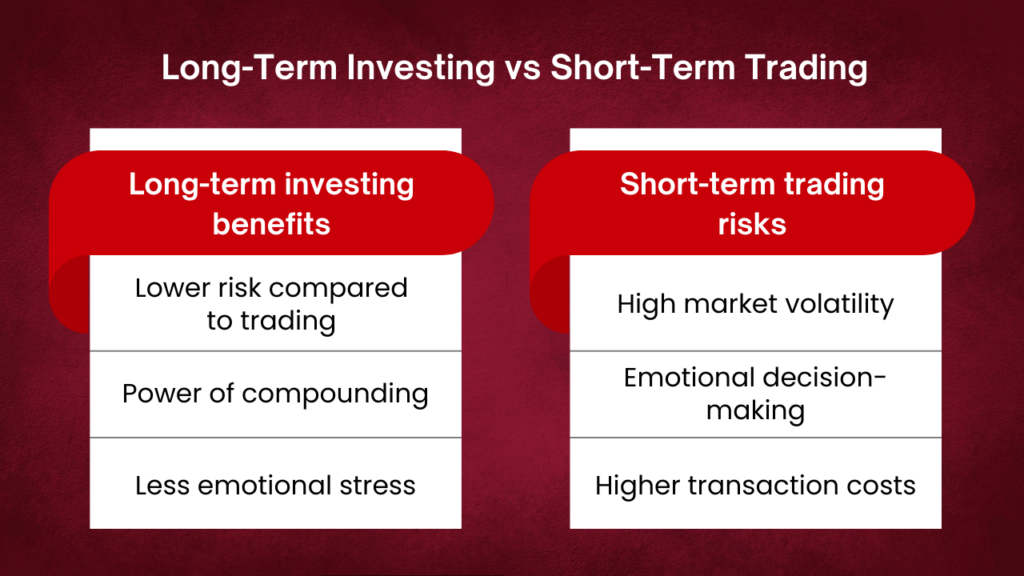
Long-Term Investing vs Short-Term Trading

Investors often get confused between long-term investing and short-term trading. While trading may offer quick profits, it comes with high risk and requires constant monitoring.

Long-term investing, on the other hand, focuses on steady growth over time.

Long-Term Investing vs Short-Term Trading

Long-term investing benefits:

  • Lower risk compared to trading
  • Power of compounding
  • Less emotional stress

Short-term trading risks:

  • High market volatility
  • Emotional decision-making
  • Higher transaction costs

For most people, long-term investing is the smarter and safer approach.

The Power of Compounding

Compounding is one of the most powerful concepts in investing. It allows your money to grow exponentially over time by earning returns on both your initial investment and the returns generated.

To maximize compounding:

  • Start investing early
  • Invest consistently
  • Reinvest your earnings

Even small investments can grow into large amounts if given enough time.

Asset Allocation Strategy

Asset allocation is the process of dividing your investments into different categories based on your risk tolerance and financial goals.

Common asset classes include:

  • Equities (stocks): High risk, high returns
  • Bonds: Stable and low risk
  • Real estate: Long-term growth
  • Gold: Protection against inflation

Example allocation strategies:

  • Aggressive: 70% stocks, 20% bonds, 10% gold
  • Moderate: 50% stocks, 30% bonds, 20% gold
  • Conservative: 30% stocks, 50% bonds, 20% gold

Choosing the right allocation is key to balancing risk and return.

Smart Strategies for Stock Market Investing

The stock market offers high return potential, but it requires knowledge and discipline. Instead of following trends blindly, investors should focus on research and long-term growth.

Popular strategies include:

  • Value investing: Buying undervalued stocks
  • Growth investing: Investing in high-growth companies
  • Dividend investing: Earning regular income from dividends

Successful investors avoid emotional decisions and focus on data-driven choices.

Mutual Funds and ETFs

Mutual funds and exchange-traded funds are ideal for beginners who want diversification and professional management.

Benefits include:

  • Easy diversification
  • Professional fund management
  • Lower risk compared to individual stocks

Systematic Investment Plans (SIPs) allow you to invest small amounts regularly, making investing more accessible.

Risk Management in Investing

Risk is an unavoidable part of investing, but it can be controlled with proper strategies. Managing risk helps protect your capital and ensures long-term growth.

Key risk management techniques:

  • Diversify your investments
  • Avoid investing all money in one asset
  • Maintain an emergency fund
  • Stay calm during market fluctuations

Never invest money that you cannot afford to lose.

Avoiding Common Investment Mistakes

Many investors lose money due to avoidable mistakes. These mistakes often come from emotional decisions and lack of planning.

Common mistakes include:

  • Following market hype
  • Overtrading
  • Lack of research
  • Panic selling during downturns

To succeed, it is important to stay disciplined, patient, and focused on long-term goals.

The Role of Technology in Investing

Technology has made investing easier and more accessible. Today, investors can manage their portfolios from anywhere using digital tools.

Popular tools include:

These tools help investors make informed and faster decisions.

Tax Planning and Investments

Tax planning is an important part of smart investing. Choosing the right investment options can help you save taxes while growing your wealth.

In India, tax-saving options include:

  • ELSS mutual funds
  • Public Provident Fund (PPF)
  • National Pension System (NPS)

Proper tax planning increases your overall returns.

Building a Consistent Investment Habit

Consistency is the key to successful investing. Instead of trying to time the market, regular investing helps reduce risk and build wealth steadily.

Best practices:

  • Invest regularly
  • Automate your investments
  • Review your portfolio periodically

Small, consistent investments can create significant wealth over time.

Smart Investment Strategies

Frequently Asked Questions (FAQs)

 1. What is the best investment strategy for beginners?

For beginners, the best strategy is to start with simple and low-risk options such as mutual funds, SIPs, or index funds. It is important to focus on long-term investing, diversification, and consistency rather than trying to make quick profits.

2. How can Kenfra Finstar help with smart investments?

Kenfra Finstar provides guidance on financial planning, investment strategies, and portfolio management. It helps investors make informed decisions, reduce risks, and choose the right investment options based on their goals.

3. Where can I get investment support in Marthandam?

If you are looking for professional investment guidance in Marthandam, you can connect with Kenfra Finstar for expert advice on financial planning, wealth creation, and smart investment strategies tailored to your needs.

4. How does Kenfra branding support financial businesses?

Kenfra branding helps financial and investment businesses build a strong digital presence through strategic marketing, branding, and content creation. This improves visibility, trust, and customer engagement in the competitive financial market.

5. Is diversification really important in investing?

Yes, diversification is one of the most important principles of investing. It helps reduce risk by spreading investments across different asset classes, ensuring that losses in one area can be balanced by gains in another.

Conclusion

Smart investment strategies are essential for building long-term financial success. By setting clear goals, diversifying your portfolio, managing risks, and staying disciplined, you can maximize your returns.

Investing is not about quick profits but about steady growth and patience. With the right approach, anyone can achieve financial independence. Start your investment journey today with Kenfra Finstar and let your money work for you with expert guidance and smart financial planning.

Share this post

Leave a Reply

Your email address will not be published. Required fields are marked *