
The Secret to Productive Teams? Real-Time Dashboards
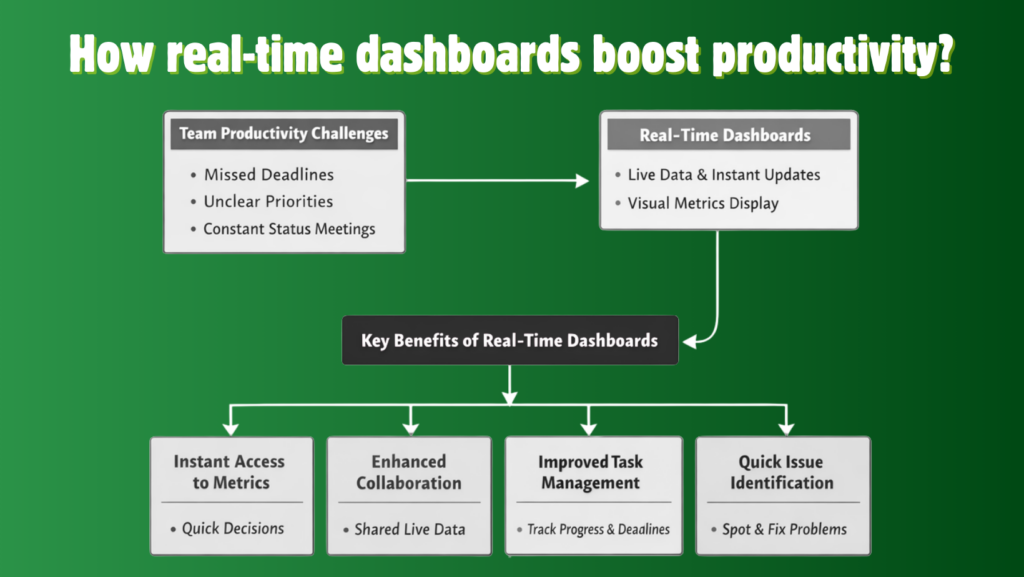
Kenfra Research - Bavithra2025-12-23T17:19:59+05:30Keeping a team productive isn’t just about working harder it’s about having the right visibility. Missed deadlines, unclear priorities, and constant status meetings often slow teams down more than the work itself. So what’s the real secret behind highly productive teams? It’s real-time dashboards.
Real-time dashboards give teams instant visibility into tasks, progress, and performance, all in one place. Instead of guessing what’s happening or waiting for updates, teams can see live data as it happens making it easier to stay aligned, communicate clearly, and act fast. Whether you’re managing a small team or overseeing complex projects, real-time dashboards can transform the way your team works.
In this blog, we’ll explore how real-time dashboards boost productivity, improve collaboration, and help teams work smarter not harder.
What Are Real-Time Dashboards?
Real-time dashboards are visual displays of live data, typically used to monitor, analyze, and manage different processes in a business. These dashboards help managers and team members view up-to-date information, metrics, and key performance indicators (KPIs) in a clear, easy-to-understand format. By having this live data at your fingertips, decision-makers can quickly identify areas of improvement and make adjustments as necessary.
Unlike static reports that can be outdated by the time they’re reviewed, real-time dashboards offer continuous updates, keeping everyone in the loop and enabling swift action. For teams working on multiple projects or tasks simultaneously, this tool is invaluable for tracking deadlines, managing resources, and monitoring progress in real time.
How Real-Time Dashboards Improve Team Productivity?
1. Instant Access to Important Metrics
One of the main benefits of real-time dashboards is that they give teams instant access to important metrics and data. Instead of waiting for weekly reports or relying on emails that may not be up-to-date, team members can always check the dashboard for the most recent information. This helps prevent bottlenecks and allows for faster decision-making.
2. Enhanced Collaboration
Real-time dashboards promote collaboration by ensuring that every team member is on the same page. Since the data is updated live, all team members can see the same information at the same time. This reduces misunderstandings, miscommunication, and the need for constant status updates. It fosters a more collaborative work environment where everyone is working toward a shared goal.
3. Improved Task and Project Management
Managing multiple tasks and projects can be challenging, especially when tracking progress and deadlines. Real-time dashboards simplify this by offering a clear view of where each task stands. This real-time visibility enables them to reallocate resources or adjust priorities as needed to keep projects on track.
4. Quick Identification of Issues
With real-time data, teams can spot issues as soon as they arise. Whether it’s a task falling behind schedule, a drop in performance, or a sudden change in resources, real-time dashboards make it easier to identify and address problems immediately. This helps teams avoid delays and ensures that projects are delivered on time.
5. Data-Driven Decision Making
Real-time dashboards provide teams with the data they need to make informed decisions. Managers and team leaders can analyze live data, track KPIs, and make changes as needed. This reduces guesswork and allows teams to focus on what’s working, while improving areas that aren’t performing as expected.
Top Benefits of Real-Time Dashboards for productive Teams
1. Increased Accountability
When everyone has access to real-time information about project progress, team members are more likely to stay accountable for their tasks. They can clearly see their responsibilities and deadlines, reducing the chances of missed or delayed tasks.
2. Better Time Management
Real-time dashboards provide visibility into how time is spent on various tasks. This insight helps teams prioritize their work more effectively, allocate time to high-priority tasks, and minimize distractions. Time management improves, and teams can achieve more in less time.
3. Better Resource Allocation
Tracking resources such as personnel, budget, and equipment can be complicated without real-time visibility. Dashboards allow managers to see how resources are being used across different projects and teams, helping them optimize resource allocation.
4. Better Client Communication
For teams working directly with clients, real-time dashboards can be shared to provide clients with transparency on project status. This builds trust and helps to keep clients informed, reducing the need for constant updates or meetings.

Frequently Asked Questions
1. How can real-time dashboards improve team collaboration?
They show the same live data to everyone, keeping the team aligned and reducing confusion.
2. Can I use real-time dashboards for remote teams?
Yes. Remote teams can access dashboards from anywhere and stay updated in real time.
3. Are real-time dashboards difficult to use?
No. Most crm dashboards are easy to use and designed to be user-friendly.
4. How do I choose the right dashboard for my team?
Choose one that works with your tools, is easy to use, and has the features your team needs.
Conclusion
If you’re looking to boost your team’s productivity and efficiency, integrating real-time dashboards is a great strategy. These powerful tools give teams instant access to important data, improve collaboration, help with task management, and provide the insights needed to make faster decisions.
If you want to experience the benefits of real-time dashboards and improve your team’s performance, try out the Kenfra CRM Portal. Our platform offers a free trial, so you can see firsthand how it can help your team work smarter, not harder.









Leave a Reply