

Top payment trends your customers expect in 2026
Kenfra Research - Bavithra2026-01-05T11:33:22+05:30As we look toward 2026, the top payment trends your customers expect are rapidly evolving. Consumers are becoming increasingly tech-savvy, and businesses must stay ahead of these changes to meet their needs. From digital wallets to biometric authentication, the future of payment technology will focus on speed, security, and convenience. If your business hasn’t yet adapted to the latest payment methods, now is the time to do so. In this article, we’ll explore the top payment trends 2026 and how they are set to reshape the way we make transactions.
Must-Watch Top Payment Trends in 2026: Innovations Shaping the Future of Transactions
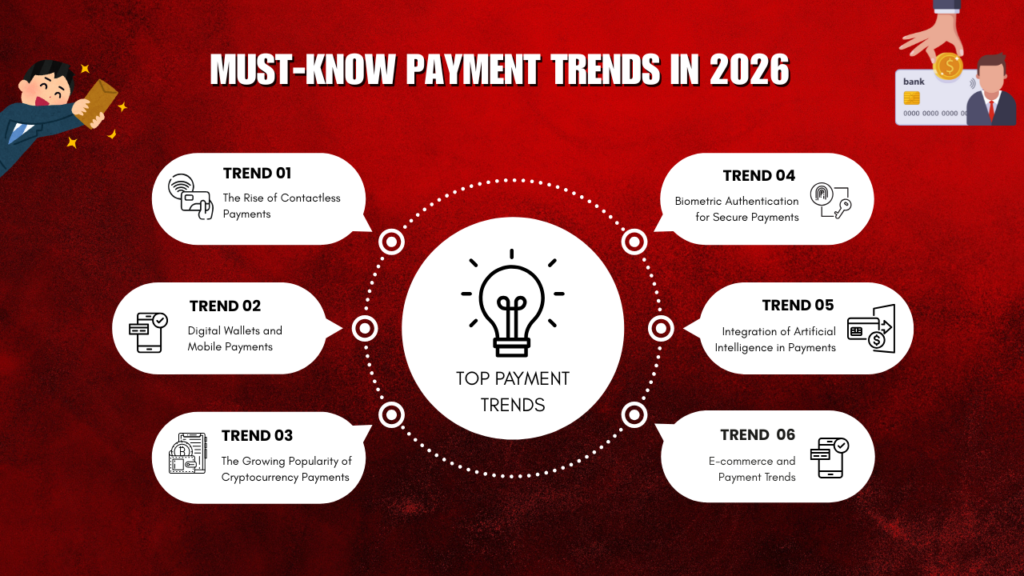
1. The Rise of Contactless Payments
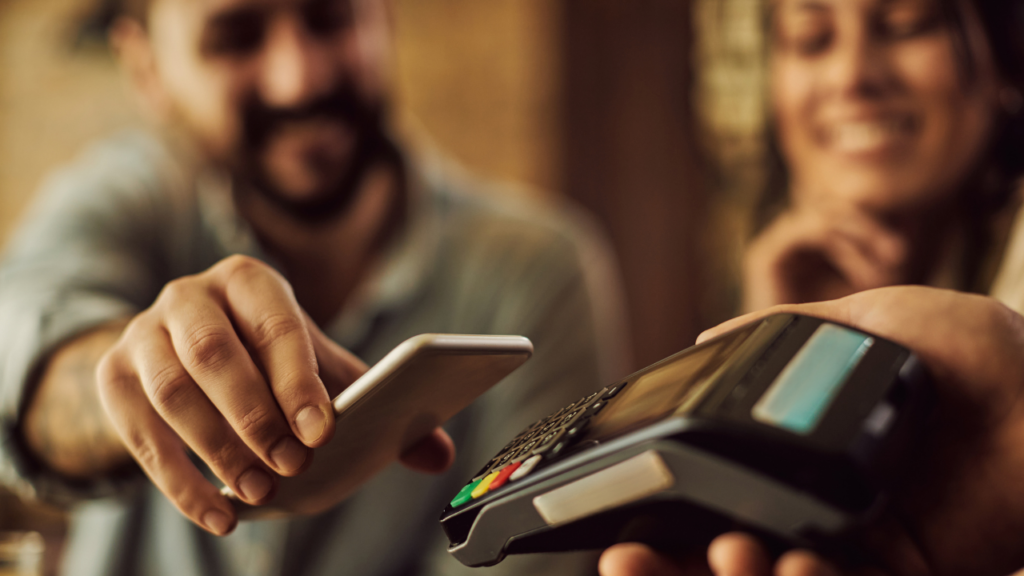
One of the most significant payment trends in 2026 is the continued rise of contactless payments. Consumers are now more accustomed to tapping their cards or smartphones to make purchases. According to recent reports, over 50% of payments are expected to be contactless by 2026. This method of payment is preferred because it’s fast, secure, and convenient.
Why is contactless payment becoming so popular?
- Speed: No need to enter PIN codes or sign receipts.
- Security: Enhanced encryption and tokenization make contactless transactions secure.
- Convenience: Customers can make payments in seconds.
As the world becomes more mobile, businesses will need to offer contactless payment solutions to stay competitive.
2. Digital Wallets and Mobile Payments
Mobile payment systems like Apple Pay, Google Pay, and Samsung Pay have already gained massive popularity, and by 2026, this trend will continue to grow. With more people carrying smartphones than wallets, digital wallets are an essential tool for consumers to make payments quickly and securely.
Why are digital wallets the future?
- Security: Encryption and biometric verification (like face or fingerprint scanning) make transactions safer.
- Convenience: No need to carry physical cards—everything is stored securely on the device.
- Global Acceptance: Many online and in-store vendors now accept digital wallets, making it easy for consumers to pay anywhere.
As a business owner, integrating mobile payments into your sales process will help you reach a larger audience and improve customer satisfaction.
3. The Growing Popularity of Cryptocurrency Payments
Cryptocurrency, once considered niche, is rapidly gaining mainstream acceptance. By 2026, we expect cryptocurrency payments to be an essential part of the global payment ecosystem. Cryptocurrencies like Bitcoin, Ethereum, and stablecoins offer low transaction fees and faster cross-border payments.
Why should your business consider cryptocurrency payments?
- Low Transaction Fees: Compared to traditional credit cards, crypto payments often have lower fees.
- Global Reach: Cryptocurrencies allow you to sell products and services internationally without worrying about exchange rates.
- Security: Blockchain technology makes cryptocurrency transactions incredibly secure and transparent.
If your target audience includes tech-savvy consumers or international clients, integrating cryptocurrency payment methods could give your business an edge.
4. Biometric Authentication for Secure Payments
As payment technology advances, security concerns are always top of mind. In 2026, biometric authentication will become a standard feature in payment systems. By using fingerprints, facial recognition, or even voice recognition, businesses can ensure that only authorized users can complete transactions.
Why is biometric authentication important for payments?
- Enhanced Security: Biometric data is unique to each individual, making it difficult to hack.
- Convenience: Customers can pay with just a touch or a glance—no PIN or password required.
- Fraud Prevention: Biometric authentication drastically reduces the chances of fraudulent transactions.
Adopting biometric authentication will not only increase security but also improve customer experience by making payments smoother and faster.
5. Integration of Artificial Intelligence in Payments
Artificial intelligence (AI) is already revolutionizing many industries, and the payment sector is no exception. In 2026, AI will be used extensively to enhance payment systems by predicting fraud, personalizing experiences, and improving transaction efficiency.
How is AI impacting payment trends?
- Fraud Detection: AI can analyze patterns and detect unusual activity, preventing fraudulent transactions.
- Personalized Experiences: AI can offer tailored payment solutions based on consumer behavior and preferences.
- Transaction Speed: AI can optimize payment processes, reducing delays and improving the overall customer experience.
AI-powered payment solutions will become an essential tool for businesses that want to stay competitive and secure.
6. E-commerce and Payment Trends
With the rapid growth of e-commerce, the way customers pay online is also changing. In 2026, businesses will need to adapt to the evolving e-commerce payment trends by offering a variety of payment options to their online customers.
What are the key trends in e-commerce payments?
- Subscription Payments: Many consumers prefer subscription-based services, where they can pay for products or services on a recurring basis.
- Buy Now, Pay Later (BNPL): Consumers increasingly expect to have flexible payment options, such as BNPL, which allows them to spread out payments over time.
- Global Payment Methods: E-commerce businesses will need to offer international payment methods to cater to global customers.
To stay ahead, e-commerce businesses must implement online payment systems that are secure, user-friendly, and offer various payment methods.
FAQs:
1. What are the most popular payment methods in 2026?
The most popular payment methods will likely include contactless payments, mobile wallets, cryptocurrency payments, and biometric authentication.
2. Why is contactless payment becoming so popular?
Contactless payment is fast, secure, and convenient, allowing customers to make transactions with a simple tap of their card or smartphone.
3. How will cryptocurrency payments impact businesses in 2026?
Cryptocurrency payments offer lower transaction fees, faster international payments, and greater security, making them a valuable tool for businesses to expand globally.
4. What is biometric authentication, and why is it important for payments?
Biometric authentication uses unique features like fingerprints or facial recognition to verify a user’s identity. It provides enhanced security and convenience for customers.
Conclusion:
As payment trends evolve over the next few years, businesses must stay informed and ready to adopt new technologies. Whether it’s offering contactless payments, integrating AI, or adopting cryptocurrency, the future of payment technology is exciting and full of opportunities.
At Kenfra BillPad, we offer a powerful billing application that can help you stay ahead of these trends. Our platform provides easy integration with modern payment systems, giving you the tools to streamline your invoicing and billing processes. Try it today with a free trial and see how our solution can benefit your business.











Leave a Reply