

Your First Paper? Don’t Panic — Do THIS Instead
Kenfra Research - Bavithra2025-12-23T17:19:21+05:30Writing first research paper can seem overwhelming. Whether you’re a new PhD student or someone just starting out in academia, it’s completely natural to feel intimidated. But there’s no need to panic. With the right approach, planning, and mindset, you can successfully tackle your first paper and lay the foundation for a long, successful academic career.
In this guide, we will break down the process into simple steps, offering practical tips and insights on how to structure your research paper, avoid common pitfalls, and enhance your academic writing skills.
Essential Steps for Writing first research Paper
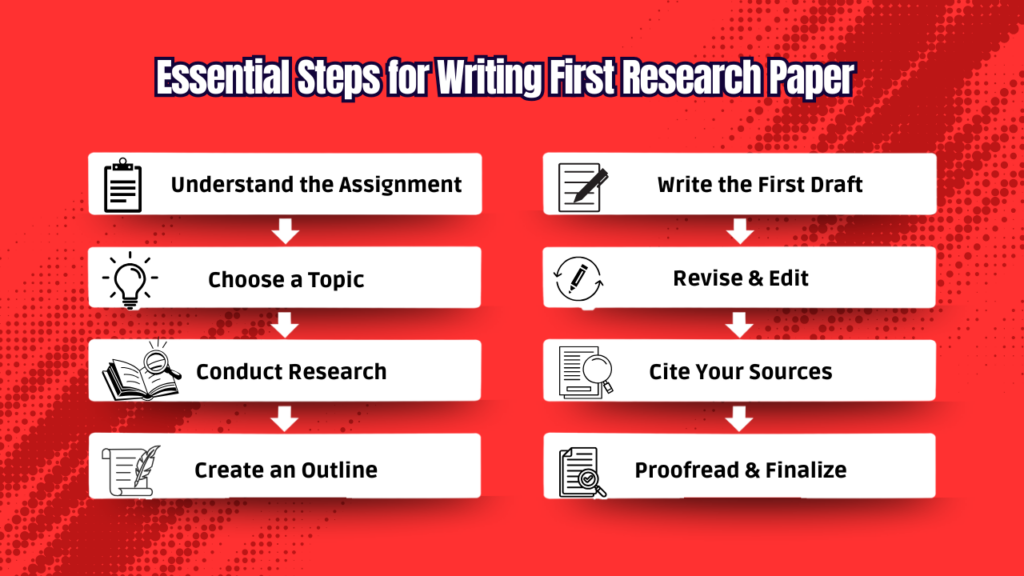
Step 1: Understand the Assignment
Before you begin writing, make sure you fully understand the requirements of your paper. Read the prompt carefully, noting the topic, the length, and any formatting guidelines. If something is unclear, don’t hesitate to ask your professor or mentor for clarification.
Tip: Break down the assignment into manageable parts, such as research, drafting, and editing.
Step 2: Choose a Topic That Interests You
Picking a research topic that excites you makes the research and writing process more enjoyable. Choose a subject that aligns with your course material or something you’re passionate about.
Tip: Keep the scope manageable. Narrow down your topic to a specific question that you can explore thoroughly.
Step 3: Conduct Thorough Research
Research is the backbone of any strong paper. Use reliable sources, such as academic journals, books, and trusted online databases. Keep track of your sources for citation purposes.
Tip: Organize your research using digital tools like Google Scholar or Zotero to store references.
Step 4: Create an Outline
An outline helps you structure your paper logically. Break it into sections: introduction, body paragraphs, and conclusion. Outline your key arguments and the evidence you’ll use to support them.
Tip: Start with a simple outline, then refine it as you go.
Step 5: Write the First Draft
Now that you have your outline and research, start writing your first draft. Don’t worry about making it perfect—just get your ideas down on paper.
Tip: Focus on getting your thoughts organized and coherent. You can always revise later.
Step 6: Revise and Edit
Once the draft is complete, step away for a day before revising. Look at your paper with fresh eyes to identify areas for improvement.
Tip: Focus on both big-picture revisions (argument strength, clarity) and small details (grammar, spelling).
Step 7: Cite Your Sources
Proper citation is crucial in academic writing. Use the required citation style (APA, MLA, Chicago, etc.) and be consistent throughout your paper.
Tip: Tools like Zotero, EndNote, or citation generators can help with formatting.
Step 8: Proofread and Finalize
Before submitting your paper, give it one last read to catch any mistakes. Consider using grammar check tools, but also manually proofread for clarity.
Tip: Ask a friend or colleague to read your paper—they may catch errors you missed.
Frequently Asked Questions
1. What should I do if I receive rejection or criticism for my paper?
Criticism is an integral part of academic life. Rather than seeing it as a setback, use it as an opportunity to improve. Revise your work based on feedback and continue to enhance your research skills.
2. How long should a research paper be?
Research papers can vary in length depending on the assignment or publication. Generally, a first research paper might be around 5,000 to 10,000 words, but check the guidelines from your professor or publication.
3. Can I write my first paper without feeling overwhelmed?
Absolutely! Breaking the task into smaller sections and focusing on one part at a time will make the process manageable. Don’t forget to take breaks and stay positive.
4. How can I avoid plagiarism?
Always properly cite your sources, use quotation marks for direct quotes, and paraphrase carefully. Keeping track of references as you research can help prevent mistakes.

Conclusion:
Writing first research paper doesn’t have to be daunting. By following a structured approach, staying organized, and seeking feedback, you can write a paper that stands out. Remember, academic writing is a skill that improves over time, so don’t be afraid to make mistakes and learn from them.
At Kenfra Research, we offer comprehensive PhD support in India, including help with writing research papers, structuring your thesis, and improving your academic skills. Reach out to us for expert guidance on your academic journey.








Leave a Reply