

Best Recurring Deposit Interest Rates in India (2026 Update)
Kenfra Research - Bavithra2026-04-09T17:24:37+05:30If you’re looking for a safe and structured way to grow your savings, recurring deposits (RDs) are one of the best investment options in India. This investment tool offers fixed interest rates and a predictable return on your money, making it an attractive choice for both conservative investors and those who want to build a disciplined savings habit. In this blog, we will explore the best recurring deposit interest rates in India for 2026 and compare different banks offering attractive RD interest rates. We’ll also discuss the key differences between recurring deposits vs fixed deposits, how to use a recurring deposit calculator, and why post office recurring deposit calculators are an excellent tool for quick interest calculations.
What is a Recurring Deposit?
A recurring deposit is a financial product that allows you to save money by depositing a fixed amount every month for a specified period. The money you deposit earns interest, and at the end of the tenure, you receive your principal amount along with the accrued interest. The beauty of recurring deposits is that they help you develop a consistent savings habit, while the fixed interest makes it a safe investment. Many banks also provide a recurring deposit app to manage your investment easily.
Best Recurring Deposit Interest Rates in India for 2026
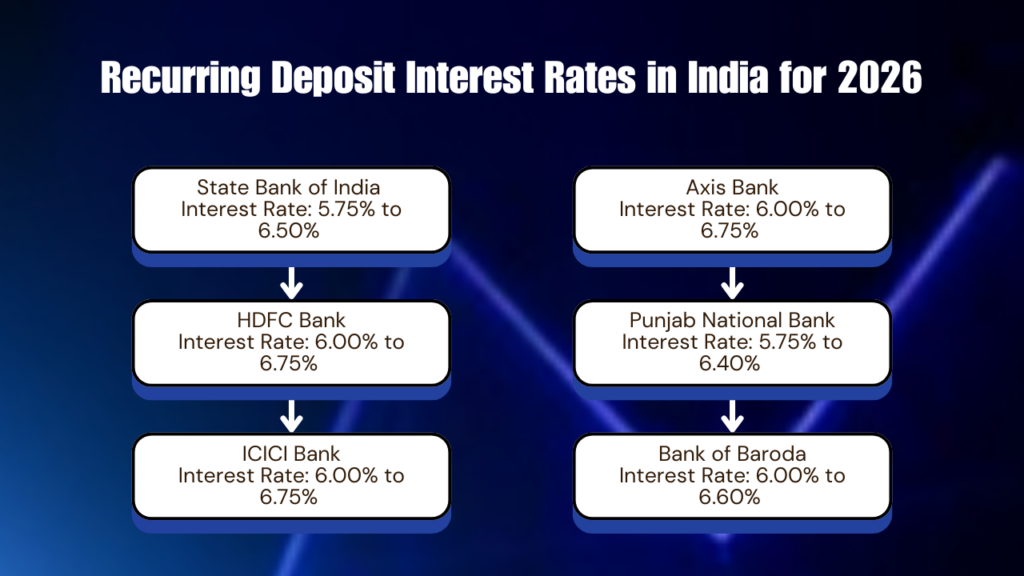
When choosing the best recurring deposit interest rates in India, it’s important to consider factors such as tenure, the bank’s reputation, and the flexibility in terms of deposits and withdrawals. Here’s a breakdown of the RD interest rates offered by major banks:
1. State Bank of India (SBI)
- Interest Rate: 5.75% to 6.50%
- Tenure: 1 year to 10 years
- Features:
- Senior citizens get an additional 0.50% on RD interest rates.
- Flexible RD tenures and easy management through online banking.
SBI is India’s largest public sector bank and continues to offer some of the most competitive recurring deposit interest rates in the country.
2. HDFC Bank
- Interest Rate: 6.00% to 6.75%
- Tenure: 6 months to 10 years
- Features:
- Attractive rates for senior citizens.
- Easy to use recurring deposit calculator on HDFC’s website for quick returns calculation.
HDFC Bank is known for its high RD interest rates and a user-friendly online platform that makes managing your recurring deposit easy.
3. ICICI Bank
- Interest Rate: 6.00% to 6.75%
- Tenure: 6 months to 10 years
- Features:
- Senior citizens benefit from higher rates.
- Use the recurring deposit calculator on ICICI’s website to estimate your earnings.
ICICI Bank offers some of the best recurring deposit interest rates, particularly for shorter tenures.
4. Axis Bank
- Interest Rate: 6.00% to 6.75%
- Tenure: 6 months to 10 years
- Features:
- Flexible tenures and competitive rates for regular and senior citizens.
- Great mobile banking app to manage your recurring deposits.
Axis Bank is another top private-sector bank offering high RD interest rates and easy management through digital platforms.
5. Punjab National Bank (PNB)
- Interest Rate: 5.75% to 6.40%
- Tenure: 1 year to 10 years
- Features:
- Higher rates for senior citizens.
- Flexible tenure options and easy online RD management.
PNB offers reliable and stable returns for those interested in long-term recurring deposits.
6. Bank of Baroda
- Interest Rate: 6.00% to 6.60%
- Tenure: 1 year to 10 years
- Features:
- Higher rates for senior citizens.
- Recurring deposit calculator available on the official website.
Bank of Baroda provides competitive recurring deposit interest rates with a strong reputation in the banking sector.
7. Kotak Mahindra Bank
- Interest Rate: 6.00% to 6.50%
- Tenure: 6 months to 10 years
- Features:
- Flexible tenure options.
- Easy online RD management and use of the recurring deposit interest calculator.
Kotak Mahindra Bank offers good interest rates and excellent customer service, making it a solid option for recurring deposits.
Fixed Deposit vs Recurring Deposit: Which is Better for You?
Both fixed deposits (FDs) and recurring deposits (RDs) have their advantages and are excellent investment tools. Here’s a quick comparison to help you decide:
- Fixed Deposit: You invest a lump sum amount upfront and earn a fixed rate of return. The FD interest rates generally tend to be higher than those of RDs for the same tenure.
- Recurring Deposit: You invest a fixed amount every month, which makes it ideal for those who prefer small, regular savings. The interest rate may be slightly lower than FDs, but the flexibility and lower initial investment make it attractive for many.
Both investment options provide fixed returns, but recurring deposits are better for those who prefer monthly contributions, while fixed deposits are better for those who can invest a large sum upfront.
How to Calculate Recurring Deposit Interest?
To calculate the interest you can earn on your recurring deposit, use a recurring deposit calculator. These calculators are available on most bank websites, including the Post Office Recurring Deposit Calculator. They take into account factors such as:
- Monthly deposit amount
- Tenure
- Interest rate
- Compound Interest
By entering these details into the recurring deposit calculator, you can quickly estimate the maturity amount, including both principal and interest.
Frequently Asked Questions
1. How are recurring deposit interest rates calculated?
Recurring deposit interest is calculated on the monthly deposits using the bank’s RD interest rate and compounding frequency. You can also use a recurring deposit interest calculator to estimate your returns easily.
2. What is the difference between recurring deposits and fixed deposits?
In a fixed deposit, you invest a lump sum upfront, while a recurring deposit allows monthly contributions. FDs generally offer slightly higher interest rates, but RDs are better for disciplined, small, regular savings.
3. Can I withdraw money from a recurring deposit before maturity?
Yes, early withdrawal is allowed in most banks, but it usually comes with a penalty and a lower interest rate than the original RD rate.
4. Is there a minimum or maximum deposit limit for RDs?
Most banks require a minimum monthly deposit, often starting from ₹100 or ₹500, and some banks set a maximum deposit limit. These vary depending on the bank’s policies.

Conclusion
Recurring deposits offer a reliable and secure way to save regularly while earning fixed returns. When comparing recurring deposits vs fixed deposits, choose the one that best suits your savings habit and financial goals. Whether you are saving for a short-term goal or building a long-term corpus, a recurring deposit can help you stay disciplined in your savings plan.
For those looking for convenience, many banks, including Kenfra FinStar, offer online recurring deposit app. These digital platforms allow you to manage your investment, track your deposits, and make contributions from anywhere at any time, making it easier than ever to stay on top of your savings plan.











Leave a Reply