

Smart Money Management Tips for Families and Students
Kenfra Research - Bavithra2026-03-18T17:08:55+05:30Managing your finances wisely is essential for both families and students. Learning how to manage money effectively can help you avoid debt, save for the future, and make your income last longer. Whether you’re tracking expenses, planning for emergencies, or investing, understanding money and money management is a key life skill. In this guide, we’ll cover practical tips for smart money management, including insights on financial management, risk management, and tools like money management apps to make the process easier.
Why Money Management Matters?
The practice of organizing and managing your finances is known as money management. Good money management helps you:
- Track how you spend money
- Save for emergencies and future goals
- Avoid unnecessary debt
- Reduce financial stress
For families, this ensures stability, while students can build a strong financial foundation early in life. Learning about financial management, time value of money in financial management, and money market basics are also essential to make smarter decisions.
Essential Steps for Smart Money Management
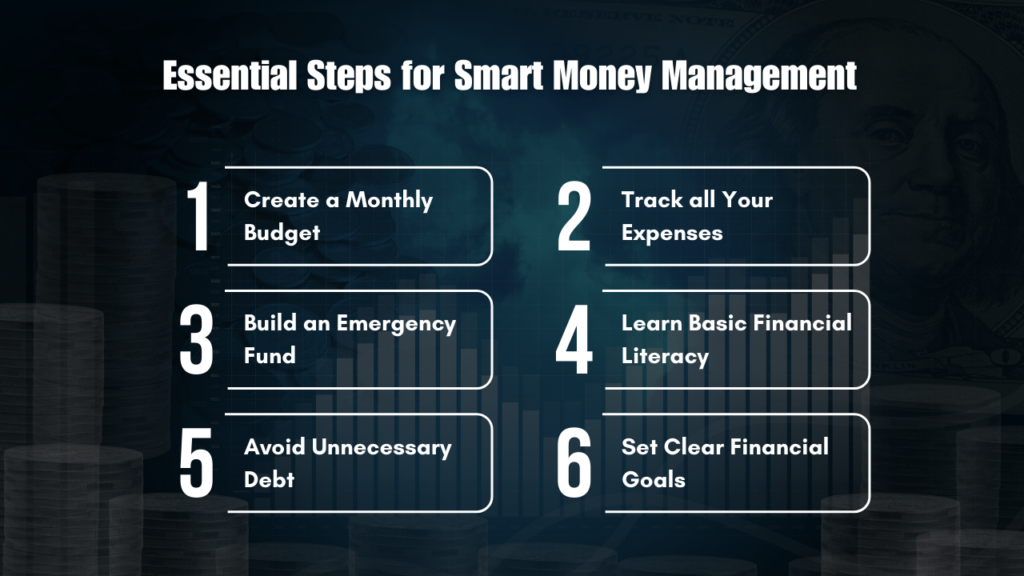
1. Create a Monthly Budget
The first step in managing finances is to create a budget. A budget helps you track income and expenses and make informed decisions about how to manage money.
Steps to create a budget:
- List all sources of income
- List all expenses (needs vs wants)
- Track where your money goes
The 50-30-20 rule is an easy strategy to use:
- 50% for needs
- 30% for wants
- 20% for savings
Using money management apps can make budgeting easier, especially for students who want to track their spending efficiently.
2. Track Your Expenses
Tracking expenses is a core part of money management. Many people don’t realize how much they spend on small, everyday purchases.
Tips for tracking expenses:
- Use a notebook or digital money management app
- Record daily expenses
- Review weekly
Understanding the time value of money in financial management can also help you realize the importance of saving early and investing wisely.
3. Build an Emergency Fund
An emergency fund is a safety net for unexpected expenses, such as medical emergencies, urgent home repairs, or sudden job loss.
How much to save:
- Students: at least 1–3 months of expenses
- Families: 3–6 months of expenses
An emergency fund is a crucial part of risk management because it protects you from financial stress and unnecessary debt.
4. Avoid Unnecessary Debt
If debt is not properly handled, it can quickly become out of control.
Tips to avoid debt:
- Spend less than you earn
- Avoid impulse buying
- Use credit cards wisely
- Pay bills on time
For students, it’s important to avoid loans unless absolutely necessary and understand financial management principles to handle money responsibly.
5. Start Saving Early
The earlier you start saving, the more time your money has to grow, thanks to the time value of money in financial management. Regular savings of even modest sums can increase dramatically over time.
Benefits of early saving:
- Less financial stress
- Better financial discipline
- Opportunity to invest and grow wealth
Money management books often emphasize the importance of saving early and consistently to build long-term financial security.
6. Set Financial Goals
Having financial goals keeps you motivated and focused.
Examples of goals:
- Short-term: saving for a gadget or course
- Medium-term: buying a car, funding education
- Long-term: buying a home, retirement planning
Money management apps can help you track your goals and see progress in real time.
7. Cut Down Unnecessary Expenses
Spending wisely is as important as earning. Cutting unnecessary expenses helps you save more without increasing your income.
Ways to save:
- Reduce eating out
- Cancel unused subscriptions
- Use discounts and offers wisely
- Buy only what you need
This is a practical way to manage money and improve overall financial management.
8. Learn Basic Financial Literacy
Understanding the basics of money management and financial management is key to making smart decisions.
Topics to focus on:
- Budgeting and expense tracking
- Time value of money in financial management
- Savings and investment strategies
- Understanding money market and interest rates
Financial literacy is essential for students, families, and anyone who wants to manage money wisely.
10. Invest Wisely
Investing is what makes your money grow, but saving money is also crucial. Understanding the money market and investment options can lead to better financial management.
Beginner-friendly investments:
- Fixed deposits
- Mutual funds
- Index funds
Always start small, diversify your investments, and learn about risk management to protect your money.
Frequently Asked Questions
1. What is money management?
Money management means planning and controlling your money. It includes budgeting, saving, avoiding debt, and making smart choices with your money.
2. Why is money management important for families and students?
Good money management helps families stay safe with money and helps students build strong money habits for the future. It also helps you save and avoid debt.
3. How can I manage my money wisely?
You can manage money wisely by making a budget, tracking your spending, saving early, avoiding debt, and setting clear goals. Checking your money regularly also helps.
4. What is the time value of money in financial management?
The time value of money means that money you have now is worth more than the same amount in the future because it can earn more if you save or invest it.
5. How do I make a monthly budget?
All of the money you get and spend should be recorded. Divide your spending into needs and wants. Apply the 50-30-20 rule: set aside 20% for savings, 30% for wants, and 50% for needs.

Conclusion
Smart money management is about making conscious choices with your money. By following these tips, families and students can improve financial health, avoid debt, and build wealth over time. From learning what is money management, the time value of money in financial management, understanding the money market, to applying risk management, every step counts toward financial stability.
For easier tracking and planning, you can also use Kenfra Finstar, the best finance application in India, to organize your expenses, set savings goals, and manage your money efficiently. Start today, stay consistent, and remember: learning how to manage my money wisely is the key to a secure and stress-free future.











Leave a Reply