

Smart Savings Start Here: Recurring Deposits by Kenfra Finstar
Kenfra Research - Bavithra2026-01-20T17:33:33+05:30Are you looking for a safe and reliable way to grow your money steadily? Recurring deposit plans might be the perfect solution for you. A recurring deposit is a type of bank deposit where you invest a fixed amount every month for a specific period, and earn interest on it. It’s an easy way to build a disciplined savings habit without feeling the pinch. At Kenfra FinStar, we provide a finance app with a free trial that can help you manage your recurring deposits, calculate interest, and plan your savings more effectively.
When you think about long-term savings, a recurring deposit ensures your money works for you. It is one of the most popular options for individuals who want to save regularly without worrying about market risks. With recurring deposit interest rates offered by banks, your savings can grow steadily over time, making it a smart choice for anyone looking to secure their financial future.
What is a Recurring Deposit?
A recurring deposit is a type of financial instrument offered by banks and other financial institutions. Unlike a fixed deposit where you invest a lump sum, a recurring deposit allows you to invest small amounts every month. This makes it suitable for people who cannot invest a large sum at once but still want to earn good interest.
Banks provide recurring deposits for various tenures, usually ranging from 6 months to 10 years. The longer you invest, the higher your interest earnings. One of the best advantages of recurring deposits is that they encourage a disciplined saving habit, which is essential for achieving financial goals.
How Recurring Deposit Works?
Understanding how recurring deposit works is simple. You decide the amount you want to save each month and the tenure of your deposit. The bank then calculates the interest on your monthly contributions and adds it to the principal at the end of the term.
Interest is typically compounded quarterly, which means the more consistent you are with your deposits, the more you earn. Many people use a recurring deposit calculator to estimate how much they will earn over a specific period. Tools like these, available on apps like Kenfra FinStar, make planning your finances easier and stress-free.
Features of Recurring Deposits (RDs)
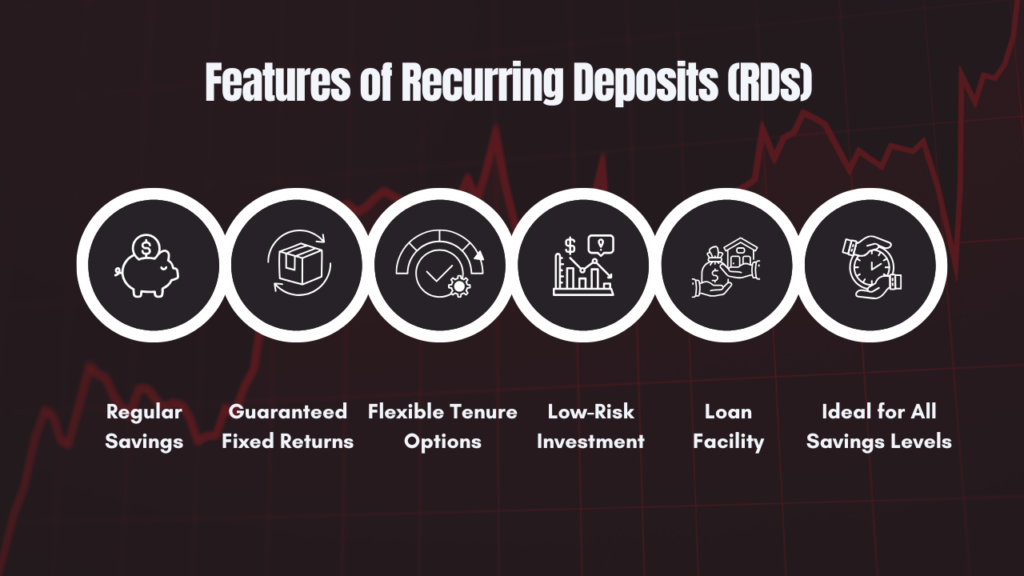
1. Regular Savings
Recurring deposits are designed to help you develop a disciplined savings habit by allowing you to deposit a fixed amount every month. This regularity ensures that you consistently set aside money for your future goals, making it easier to manage your finances without the need to invest a large sum all at once. Over time, this steady approach to saving helps build a strong financial foundation.
2. Fixed and Guaranteed Returns
One of the key features of RDs is that they offer fixed interest rates for the entire tenure of the deposit. Unlike market-linked investments that can fluctuate, the returns on recurring deposits are predictable, providing financial stability and peace of mind. You know exactly how much your savings will grow, making it an attractive choice for risk-averse individuals.
3. Flexible Tenure Options
Recurring deposits come with flexible tenure options that allow you to choose a period that suits your financial goals. Whether you are saving for a short-term expense, like a vacation, or planning for long-term objectives such as retirement, RDs provide the flexibility to align your deposit duration with your needs. This makes it easier to plan and achieve your financial milestones.
4. Low-Risk Investment
Since recurring deposits are bank-backed, your principal investment is secure, and the interest is guaranteed. This low-risk feature makes RDs an ideal choice for individuals who want steady growth of their savings without exposure to market volatility. For those who prioritize safety over high-risk returns, recurring deposits offer a reliable solution.
5. Loan Facility
Many banks provide the option to take a loan against your recurring deposit. This feature adds financial flexibility, allowing you to access funds during emergencies without prematurely breaking your deposit. While your RD continues to earn interest, you can meet urgent financial needs, making it a convenient backup plan for unforeseen expenses.
6. Ideal for All Savings Levels
Recurring deposits are suitable for everyone, whether you are a student, salaried professional, or older adults. They allow you to start saving with small amounts and gradually accumulate a significant corpus over time. With their secure returns and structured approach, RDs are a practical tool for building wealth steadily and consistently.
Recurring Deposits vs Savings Accounts
Many people wonder whether a savings account is better than recurring deposits. While savings accounts provide flexibility and instant access to funds, the interest rates are generally lower compared to recurring deposits. A savings account may match recurring deposits 2025 rates in some rare cases, but in most scenarios, recurring deposits remain more profitable due to compounding and fixed interest rates. By using tools like Kenfra FinStar, you can easily compare different banks and identify banks with high interest rates on recurring deposits, ensuring that your money grows efficiently and securely over time.
Types of Recurring Deposits
Bank Recurring Deposits:
These are the most common type of recurring deposits and are offered by almost all banks. They come with competitive interest rates and flexible tenure options, making them suitable for salaried individuals, students, and anyone looking to build a disciplined savings habit. Bank recurring deposits are reliable, low-risk, and allow you to plan your finances systematically over a specific period.
Corporate Recurring Deposits:
Some companies offer recurring deposit schemes to employees or the general public. These corporate recurring deposits often provide slightly higher returns compared to standard bank deposits. They are designed to encourage regular savings while offering attractive interest rates, making them a good option for those seeking better growth on their monthly contributions.
Recurring Deposits for Customers Aged 60 Years and Above:
Many banks provide special recurring deposit schemes specifically for older adults. These deposits come with higher interest rates as an incentive, helping elders maximize their savings after retirement. With longer tenures and secure returns, older adults recurring deposits offer both financial security and steady income growth.
Different banks also offer variations like fixed recurring deposits notes, which provide a clear record of all deposits and the interest accrued. This makes it easier to track your savings progress, plan for future financial goals, and ensure that your money grows systematically over time.
Frequently Asked Questions (FAQ)
1. Are recurring deposits safe?
Yes, recurring deposits are considered a very safe investment, especially when done with banks. Unlike market-based investments, your principal amount is secure, and the interest rate is fixed, minimizing risk and providing a guaranteed return over the chosen period.
2. What are the benefits of recurring deposits over savings accounts?
Recurring deposits offer higher interest rates compared to savings accounts and provide fixed, predictable returns. They also promote disciplined saving habits, as you are required to deposit a fixed amount every month. Savings accounts, while flexible, generally offer lower returns and do not encourage long-term financial planning.
3. Who can open a recurring deposit?
Anyone with a valid bank account can open a recurring deposit, including salaried professionals, students, homemakers, and older adults. Special RD schemes for older adults often offer higher interest rates, making it a popular choice for retirement savings.
4. Can I choose the tenure and deposit amount?
Yes, banks and financial institutions allow flexibility in choosing both the monthly deposit amount and the tenure. You can start with as little as a few hundred rupees per month and select a tenure ranging from six months to several years, depending on your financial goals.

Conclusion
Recurring deposits are a smart, risk-free way to grow your savings steadily. By understanding what is recurring deposit, how it works, and how to calculate recurring deposit interest, you can make informed decisions for your financial future. With the help of apps like Kenfra FinStar, you can manage your recurring deposits, calculate interest easily, and track multiple savings plans in one place. Start your disciplined saving journey today with our finance app, available with a free trial, and watch your money grow safely over time.











Leave a Reply